The post-C-section belly is not just fat. It's also swelling from surgery, a uterus that hasn't shrunk back yet, and abdominal muscles that were cut through and need to reconnect. Any plan that treats it like a standard weight-loss problem is going to feel like it's failing, because it's ignoring half of what's actually going on.
What that belly actually is, right now
For the first 6 to 8 weeks, what you're seeing is mostly not fat. It's post-surgical swelling (edema), your uterus (which at one week postpartum is still about the size of a grapefruit, sitting above your pubic bone), and loose skin and muscle that haven't re-tensioned yet. You will lose a significant amount of this just through normal healing and time, without doing anything. Most women lose the bulk of their pregnancy weight by 6 months postpartum, C-section or not, through a combination of fluid loss, uterine involution, and returning to pre-pregnancy eating patterns.
When it's safe to start exercising
Your 6-week postpartum checkup is the standard clearance point, but many providers are fine with gentle walking and basic pelvic floor work before then, as long as your incision is healing well. What you should not do before clearance: anything that loads the core directly (planks, crunches, heavy lifting), anything high-impact (running, jumping), and anything that pulls on the incision site.
After clearance, start with walking. It's boring advice, but walking is genuinely effective for post-C-section recovery: it promotes circulation (which helps surgical healing), aids digestion (which helps with the constipation that pain meds and iron supplements cause), and burns calories without stressing the incision or the core. Start with 10 to 15 minutes and build up.
The core work that's safe after a C-section
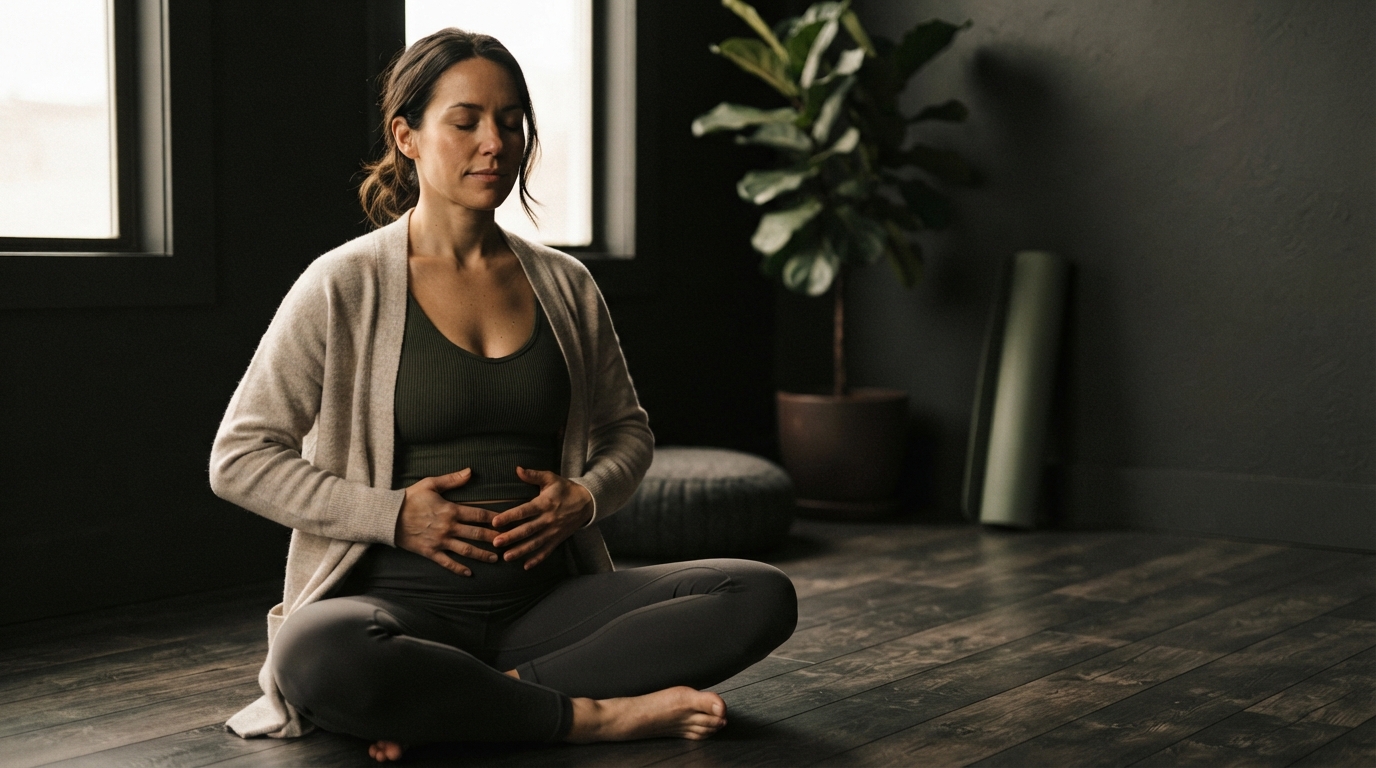
Your abdominal muscles were surgically separated, and the fascia was cut and re-stitched. The tissue needs time to regain its strength before you load it. Diaphragmatic breathing is the starting point: inhale to expand your ribs, exhale to gently draw your belly inward. This reconnects your nervous system to your deep core without any external load.
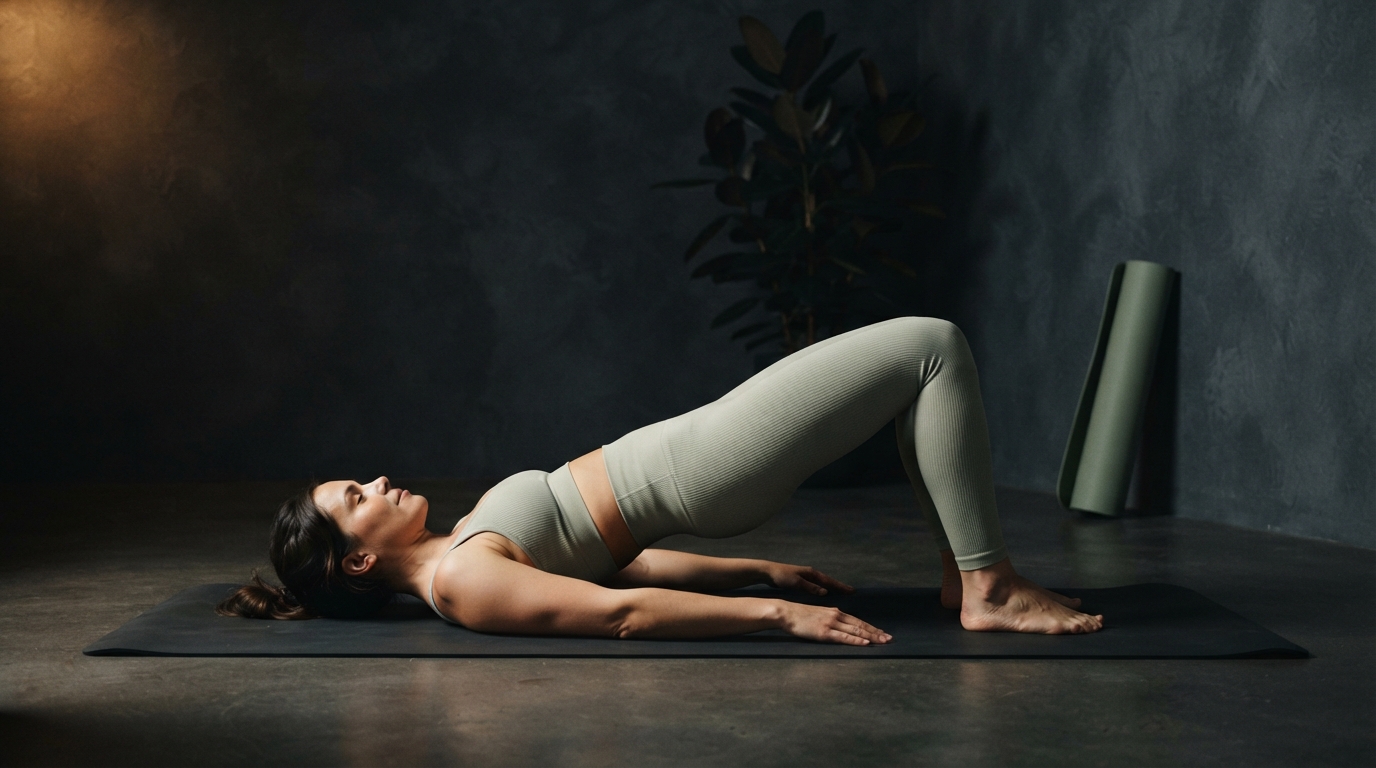
From there, heel slides, pelvic tilts, and gentle glute bridges (without weight) are the next layer. Watch your incision: if you feel pulling, stretching, or any sharp sensation, stop and regress. Some women feel tightness along the incision for months, which is normal. Sharp pain is not.
Scar tissue mobilization helps too. Once your incision is fully closed (usually by 2 to 3 weeks), gentle massage along the scar can prevent the tissue from adhering to the layers underneath. Use your fingertips to massage the scar in small circles and along its length. A few minutes a day makes a difference in how the scar feels and moves as it heals.
Nutrition that supports healing and weight loss
Calorie restriction in the first 6 to 8 weeks post-C-section is a bad idea. Your body is recovering from major abdominal surgery while also producing breast milk (if you're nursing), managing massive hormonal shifts, and operating on broken sleep. Under-eating during this window slows wound healing, reduces energy, and can disrupt milk supply.
Instead of cutting calories, focus on food quality. Protein at every meal supports tissue repair. Iron-rich foods (red meat, lentils, spinach) replace what you lost during surgery. Omega-3s from fish, walnuts, and chia seeds support the anti-inflammatory response your body needs for healing. Fiber and water to keep digestion moving, because post-surgical constipation is painful on its own and worse when it meets a C-section incision.
Once you're past the 8-week mark, cleared by your provider, and feeling like your energy has stabilized, you can start thinking about a modest calorie deficit if weight loss is a goal. A 300 to 500 calorie daily deficit is enough to lose about a pound per week without affecting milk supply or recovery. That's roughly cutting out one snack per day, not overhauling your entire diet.
The timeline that's actually realistic
Weeks 1 to 2: mostly bed rest, gentle walking to the bathroom and back. Don't even think about your stomach. Weeks 2 to 6: walking more, breathing exercises, pelvic floor work. You'll notice the swelling starting to drop. Weeks 6 to 12: with provider clearance, structured walking, basic core activation exercises, gradual return to normal movement. Month 3 to 6: this is where most women see the biggest change. Your body has healed enough to handle real exercise, your hormones are stabilizing, and you can start progressively loading your core and doing moderate cardio. Months 6 to 12: for most women, this is when the belly starts to look and feel more like it used to. Not identical, but closer.
Where to go from here
Recovering from a C-section requires a program that accounts for the surgery, not just generic postpartum advice. Create a free Catalyst Mom account to get C-section-specific recovery programs that progress at the right pace.
Frequently Asked Questions
Why does my belly still look pregnant months after a C-section?
Several reasons at once: the uterine involution process takes 6 to 8 weeks, surgical swelling can persist for months, abdominal muscles and connective tissue need time and work to re-tension, and some fat retention is normal while your body supports recovery and (if applicable) breastfeeding. It's a combination, not just fat.
Is it harder to lose belly fat after a C-section vs vaginal birth?
The initial recovery is slower because it's major surgery. Once you're healed and cleared to exercise (usually around 6 to 8 weeks), the fat-loss process is essentially the same as after a vaginal birth. The difference is the start date, not the process.
Can I wear a postpartum belly wrap after a C-section?
Many women find abdominal binders helpful for comfort and support in the first few weeks, especially when moving around or coughing. They provide mechanical support but do not burn fat or strengthen muscle on their own. Use them for comfort, not as a treatment.
When can I do ab exercises after a C-section?
Gentle breathing-based core work can start within the first couple of weeks. Structured abdominal exercises (beyond breathing and pelvic tilts) typically begin after your 6-week clearance, and should start with the most basic movements (heel slides, glute bridges) before progressing to anything loaded.
Will my C-section scar affect my stomach long-term?
The scar itself is a cosmetic concern for some women. Functionally, well-healed scar tissue rarely causes problems. Scar tissue mobilization (gentle massage) in the first few months can improve how the scar feels and moves. If you experience pain, pulling, or a dragging sensation from the scar that doesn't improve, mention it to your provider.