First-trimester exercise advice is a mess. Some sources say keep doing what you've been doing. Others say stop everything and rest. Your OB might say one thing, your mother-in-law says another, and the internet says don't even look at a kettlebell. Here's what the American College of Obstetricians and Gynecologists (ACOG) actually recommends, translated into plain language.
The good news: most of what you already do is fine
If you were exercising before pregnancy, ACOG's position is clear: you can continue. You don't need to switch to "prenatal" versions of your workouts in the first trimester. The baby is still well-protected by the pelvis and amniotic fluid at this stage, and there's no physical reason to scale back intensity or type, with a few specific exceptions listed below. If you weren't exercising before, the first trimester is a good time to start with moderate activity: walking, swimming, or basic strength training.
Exercises that are safe in the first trimester
Walking. The most underrated exercise in existence. It doesn't require equipment, you can do it at any fitness level, and it provides real cardiovascular benefits. Start with 20 to 30 minutes if you're new to it, longer if you're already active.
Strength training. Full-body compound movements (squats, deadlifts at moderate weight, lunges, push-ups, rows) are all fine. The baby is not at risk from moderate loading in the first trimester. Keep the weight manageable and your form clean. If you were lifting before pregnancy, you can continue at your current level. If you're new to it, start with bodyweight or light dumbbells and focus on learning the movements.
Swimming and water exercise. The water supports your body weight, which is helpful if you're dealing with first-trimester fatigue or nausea. There's no impact, your core stays engaged, and you can get a solid cardiovascular workout without overheating, which matters because your core temperature runs higher in early pregnancy.
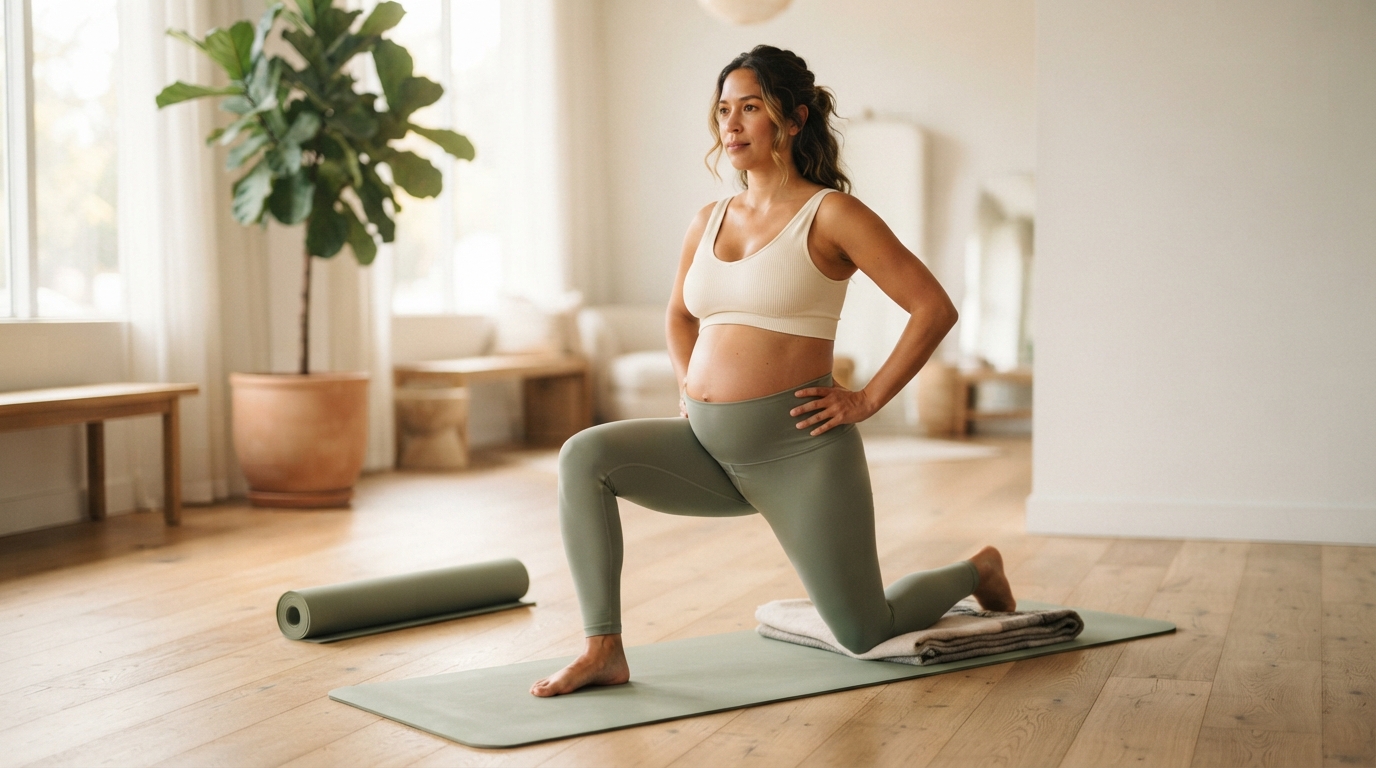
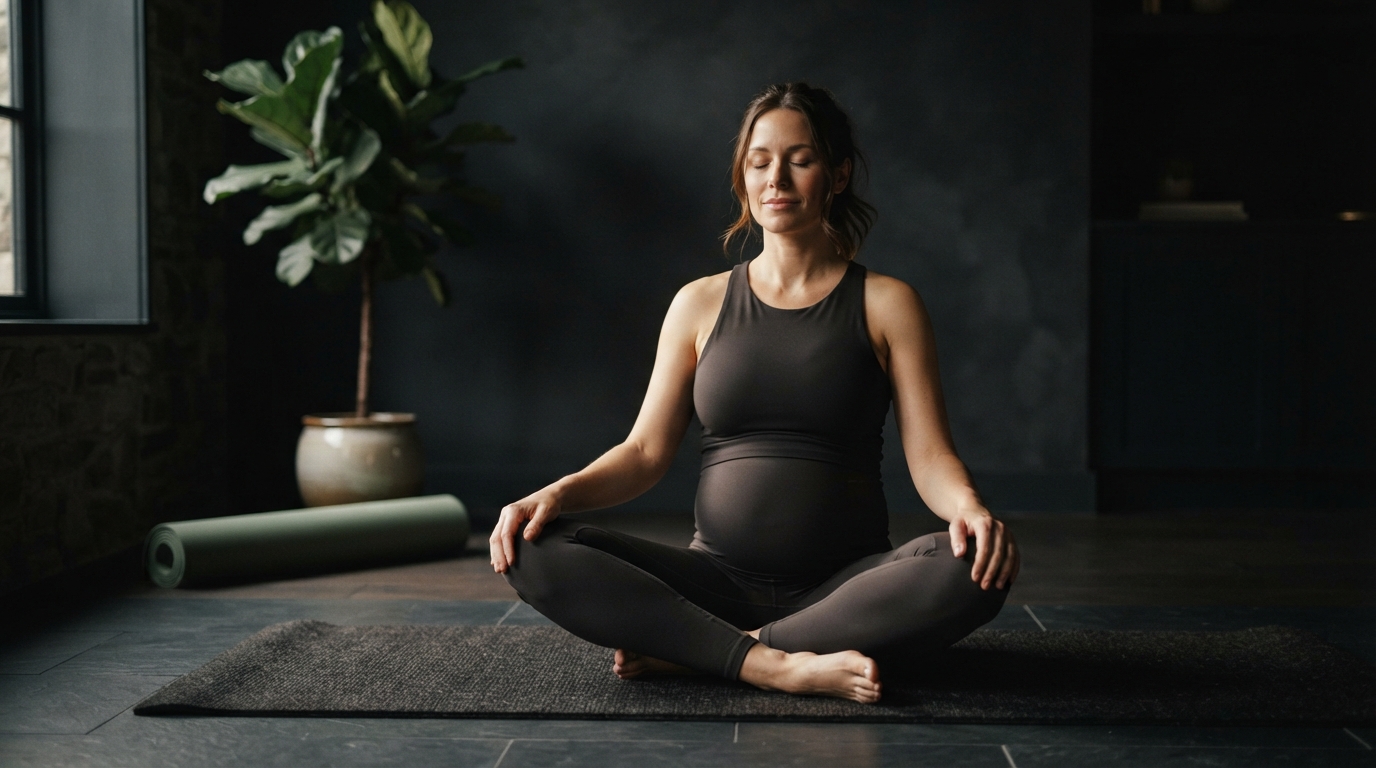
Prenatal yoga. Useful for flexibility, body awareness, and stress management. The main benefit in the first trimester is learning breathwork and relaxation techniques you'll use later in labor. Modify or skip deep twists and any pose that compresses your belly, though in the first trimester the belly isn't big enough for this to be a real concern yet.
Cycling. Stationary cycling is fine at any point. Outdoor cycling becomes a fall risk as your center of gravity shifts later in pregnancy, but in the first trimester it's generally safe. If you're an experienced cyclist and comfortable on the bike, you're fine.
What to actually avoid
Contact sports. Soccer, basketball, martial arts, anything where you could take a hit to the abdomen. The risk isn't to the baby at this stage (it's well protected), but to you. Pregnancy hormones loosen your ligaments, making joint injuries more likely. A hard fall or a blow to the pelvis can cause complications.
Activities with a high risk of falling. Horseback riding, downhill skiing, rock climbing, gymnastics. Again, this is more about protecting you than the baby. A fall that results in trauma to your abdomen or pelvis can cause placental abruption, even this early.
Exercising flat on your back. After about week 16 (so this isn't a first-trimester concern yet, but it's coming), lying flat on your back can compress the inferior vena cava, the large vein that returns blood to your heart. This reduces blood flow to the baby and can make you dizzy. In the first trimester, your uterus isn't big enough to cause this, so back-lying exercises are still fine for now.
Scuba diving. The pressure changes can cause fetal decompression sickness. This one is absolute, at any point in pregnancy.
Overheating. Your basal body temperature is already elevated in pregnancy. Exercising in extreme heat or to the point of exhaustion can push your core temperature into a range that's concerning for fetal development, particularly in the first trimester when the neural tube is forming. Exercise in a cool environment, stay hydrated, and stop if you feel hot to the point of distress, not just warm from effort.
What about morning sickness?
Some women feel too nauseous to exercise at all in the first trimester. That's valid. If the thought of moving makes you want to throw up, rest. Your body is doing an enormous amount of work building the placenta, which is the organ that will nourish the baby for the rest of pregnancy. That process alone burns significant energy. If you can manage a short walk, do that. If you can't, don't add guilt on top of nausea.
For women with milder nausea, exercise can actually help. Low-to-moderate movement, especially outdoors, has been shown to reduce nausea in some pregnant women, possibly through endorphin release and improved blood sugar regulation. The key is finding the intensity that doesn't make it worse, which for most women is below 60% of maximum heart rate.
Where to go from here
Your exercise needs will change as your pregnancy progresses. Create a free Catalyst Mom account to get trimester-specific workouts that adapt to each stage.
Frequently Asked Questions
Can I lift weights in the first trimester?
Yes. ACOG supports strength training throughout pregnancy. If you lifted before, continue at your current level. If you're new, start light and learn proper form. Avoid holding your breath (the Valsalva maneuver) during heavy lifts, as it spikes blood pressure.
Is it safe to run in the first trimester?
If you were a runner before pregnancy, you can usually continue. If you're new to running, the first trimester is not the ideal time to start a high-impact routine. Walking and low-impact cardio are safer entry points.
Can exercise cause a miscarriage in the first trimester?
No. Normal, moderate exercise has not been shown to increase miscarriage risk. Most first-trimester miscarriages are caused by chromosomal abnormalities in the embryo, not by anything the mother did or didn't do. If your provider has told you to avoid exercise for a specific medical reason (like a threatened miscarriage or a history of preterm labor), follow that guidance.
What heart rate should I aim for when exercising pregnant?
ACOG no longer recommends a specific heart rate limit (the old "140 bpm" rule is outdated). Instead, they recommend the "talk test": you should be able to carry on a conversation while exercising. If you can't, you're working too hard. This is a simpler and more individualized guideline than a fixed number.
Should I modify my workout if I have no symptoms?
If you feel fine and your provider hasn't flagged any concerns, there's no medical reason to modify your routine in the first trimester. As the pregnancy progresses and your body changes, modifications will become necessary, but that's a second and third trimester conversation.