The Quick Answer
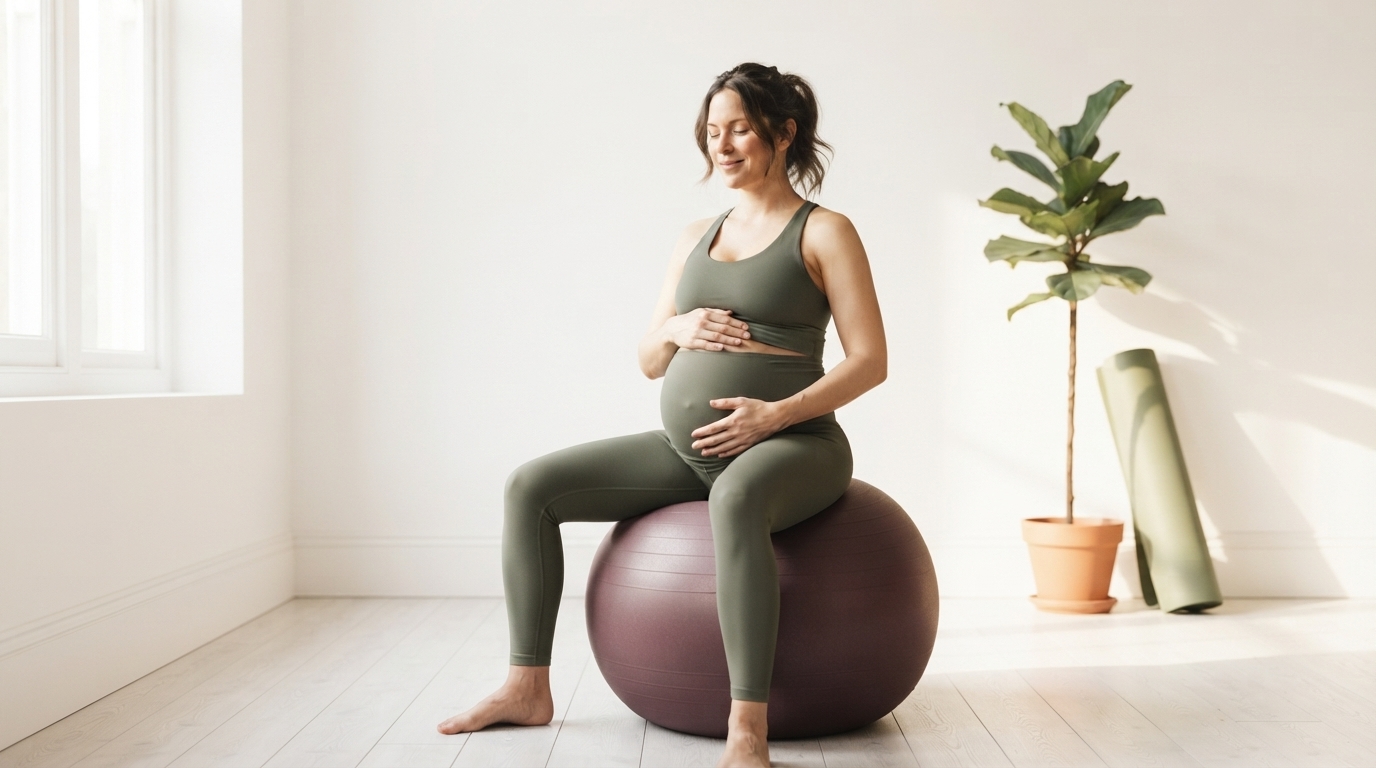
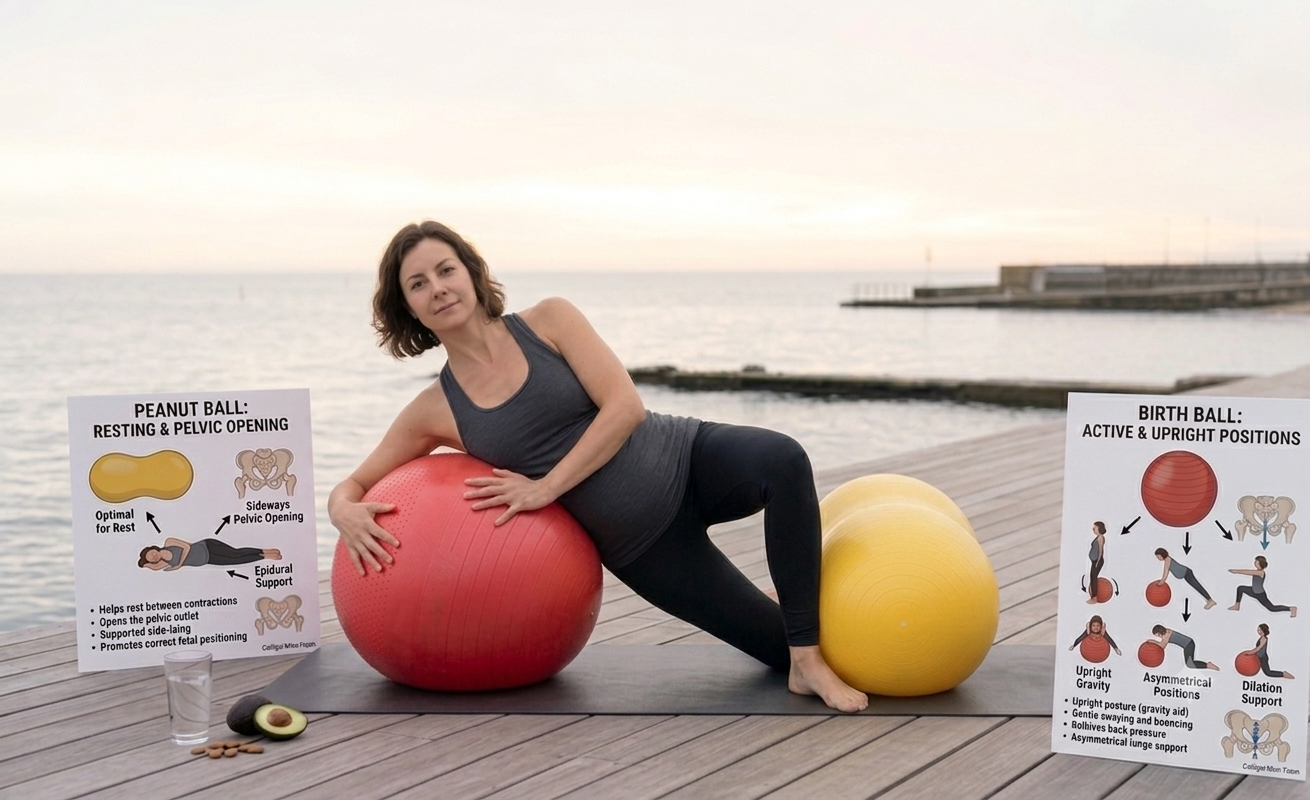
A birth ball (round) is for active, upright movement — sitting, bouncing, rocking, and hip circles during pregnancy and early labor. A peanut ball (peanut-shaped) is for resting positions — it goes between your knees while you lie on your side, keeping the pelvis open when you cannot be upright, such as with an epidural.
Side-by-Side Comparison
| Birth Ball | Peanut Ball | |
|---|---|---|
| Shape | Round | Peanut / hourglass |
| Best for | Pregnancy comfort, active labor, postpartum exercise | Labor with an epidural, side-lying rest |
| How you use it | Sit and move on it | Place between knees while lying down |
| Evidence | Shorter labor, less pain in studies | Studies show faster dilation and fewer cesareans when used with epidurals |
| Use after birth? | Yes — core rehab, soothing baby | Rarely |
When the Birth Ball Wins
If you are buying one tool for pregnancy through postpartum, get the round ball. You can use it from the first trimester for posture and back pain, through labor for movement, and afterward for gentle core work and even bouncing a fussy newborn. Start with our complete birth ball guide and make sure you get the right size in the buying guide.
When the Peanut Ball Wins
If you are planning an epidural or know you will labor mostly in bed, ask whether your hospital provides peanut balls (many do). Tucked between your knees in a side-lying position, it keeps the pelvic outlet open so baby can keep descending even while you rest.
The Real Answer for Most Moms
Own a birth ball; borrow the hospital's peanut ball. You get daily value from the round ball for months, while the peanut ball shines for a matter of hours — and the hospital usually has one waiting.
Sizing Cheat Sheet
- Under 5'3": 55 cm ball
- 5'4"–5'9": 65 cm ball
- 5'10" and taller: 75 cm ball
Check the fit: sitting on the ball, your hips should be level with or slightly higher than your knees. More sizing help and anti-burst safety tips in our safety guide and FAQ.
The Positions Labor Nurses Actually Set Up
If you do end up with a peanut ball, these are the two configurations used most on labor floors:
- Side-lying: you lie on your side, the peanut ball goes between your knees with both legs resting over it. This keeps the pelvic outlet open during epidural rest, and nurses typically rotate you to the other side every 30–60 minutes.
- Flying cowgirl: lying on your side, your top leg drapes forward over the ball while the bottom leg stays straight. Often used to help a baby rotate out of a posterior position.
Knowing the names means you can simply ask your nurse, "Can we try the peanut ball side-lying?" — most will be delighted you know what it is.
Our Honest Buying Advice
This is the part most gear roundups will not tell you, because they earn commission on both balls: most moms should not buy a peanut ball. It is a single-purpose tool for a window of hours, hospitals increasingly stock them, and used ones resell constantly because they get used once. Put the money toward a quality anti-burst round ball (under $30) that you will sit on daily for months — or toward a postnatal program you will actually use, like Core Restore Foundations.
Peanut Ball vs Birth Ball FAQ
Can I use a regular gym exercise ball as a birth ball?
If it is anti-burst rated (it should say so explicitly) and sized so your hips sit level with or above your knees, yes — birth balls and quality exercise balls are the same product with different marketing. Avoid cheap, thin-walled balls.
What size peanut ball do I need?
Most women fit a 50 cm peanut ball; very tall women (5'10"+) may prefer 60 cm. When in doubt, the smaller size is usually the right call — oversized peanut balls strain the hips.
Do I need either one for a planned C-section?
For the birth itself, no. But the round ball still earns its place in pregnancy (back pain, posture) and in post-cesarean recovery as a gentle core tool later on.
This article is for educational purposes only and is not medical advice. Always consult your healthcare provider before starting or changing any exercise, nutrition, or fertility plan.