Google "what to eat when trying to conceive" and you'll get a wall of listicles that all say the same thing: leafy greens, salmon, whole grains. Fine advice, but useless if you don't know why those foods made the list or how to actually build meals around them. This breaks it down by the nutrient, not the food, so you can work with what you already eat.
Folate before pregnancy, not just during
Folic acid supplements get all the press, but food-source folate matters too. Dark leafy greens (spinach, kale, arugula), lentils, black beans, and asparagus all deliver folate in forms your body absorbs well. The reason this nutrient matters before you're even pregnant: the neural tube, which becomes the baby's brain and spinal cord, closes in the first 3 to 4 weeks of pregnancy. Most women don't know they're pregnant until week 4 or later. If your folate stores are low at that point, you've already missed the window where it matters most.
A prenatal vitamin with at least 400 mcg of folic acid covers the baseline. Food fills in the rest. A cup of cooked lentils has about 360 mcg of folate on its own.
Iron stores you'll need later
Pregnancy drains iron. Your blood volume nearly doubles, and your body pulls from existing stores to build the baby's blood supply too. Women who start pregnancy with low iron end up anemic during it, and postpartum fatigue hits them harder. Build the bank now.
Red meat, chicken liver (if you can stomach it), sardines, lentils, pumpkin seeds, and fortified cereals are all strong sources. Pair iron-rich foods with something that has vitamin C in the same meal, like a glass of orange juice or some bell peppers. Vitamin C roughly doubles how much iron your body absorbs from plant sources. Coffee and tea block absorption, so drink them between meals instead of with them.
Healthy fats, specifically the ones that matter for hormones
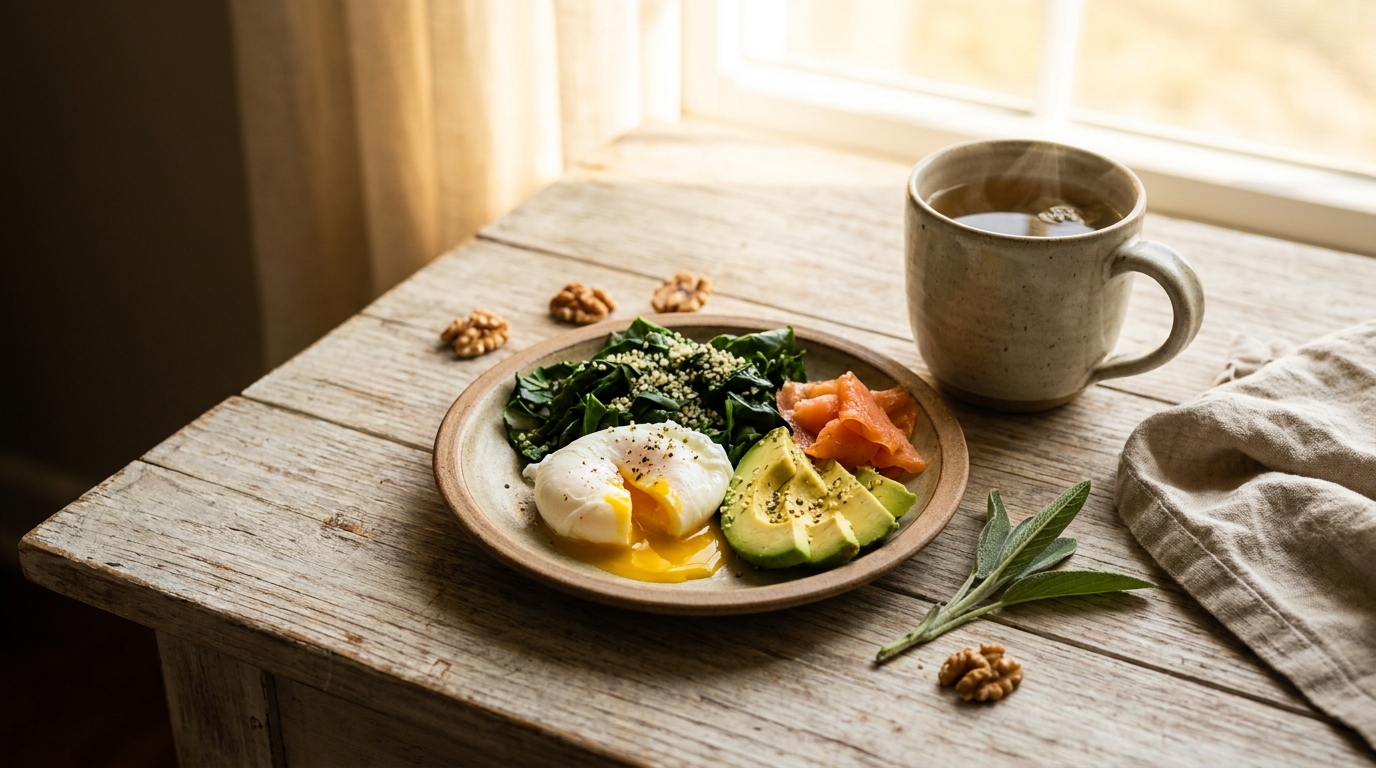
Your sex hormones (estrogen, progesterone, testosterone) are built from cholesterol. You don't need to eat cholesterol directly, but you do need enough dietary fat for your body to produce these hormones at all. The fats worth prioritizing during TTC: omega-3 fatty acids from fatty fish (salmon, sardines, anchovies), walnuts, and chia seeds; monounsaturated fats from olive oil, avocados, and almonds.
A 2018 study in the journal Human Reproduction found that women who ate the most omega-3s had a significantly higher probability of clinical pregnancy compared to those who ate the least. The effect size wasn't enormous, but it was real and consistent across the study population. Two servings of fatty fish per week is the practical takeaway.
Protein at every meal
Protein stabilizes blood sugar, which keeps insulin levels in check. High insulin disrupts ovulation in some women, particularly those with PCOS. You don't need protein powder or anything fancy. Eggs at breakfast, beans in your salad, chicken or tofu at dinner. The goal is a palm-sized portion at each meal.
What to actually cut back on
Trans fats are the clearest dietary villain for fertility. A large Nurses' Health Study II analysis found that women who got 2% of their calories from trans fats (about 4 grams, or one donut's worth) had nearly double the risk of ovulatory infertility compared to women who ate almost none. Trans fats have been largely phased out of the US food supply, but they still show up in some fried foods, commercial baked goods, and anything with "partially hydrogenated" oil in the ingredients.
Alcohol is less clear-cut. The official guidance says no alcohol when trying to conceive. The honest answer: there's no known "safe" amount during early pregnancy, and since you don't know exactly when early pregnancy begins, cutting back or eliminating it is the conservative move. Some studies show no effect from moderate drinking before conception; others show reduced fertility even at low intake. The evidence isn't settled, but the stakes are high enough that most fertility specialists recommend abstaining.
Caffeine is fine in moderation. Under 200 mg per day (roughly one 12-oz coffee) has not been linked to reduced fertility in most research. Above 400 to 500 mg, some studies show longer time to pregnancy. If you're drinking four cups a day, cut to one or two.
A day of eating that hits the marks
Breakfast: scrambled eggs with spinach and a slice of whole-grain toast, plus an orange. Lunch: lentil soup with a side of sardines (or chicken if you hate fish), bell peppers, and a handful of walnuts. Dinner: salmon with roasted sweet potatoes and steamed broccoli. Snacks: Greek yogurt, an apple with almond butter, or a handful of pumpkin seeds. Nothing complicated, nothing expensive, and every meal hits at least two of the nutrient targets above.
Where to go from here
A TTC nutrition plan works better alongside a workout plan that supports your cycle. Create a free Catalyst Mom account to get TTC-specific meal guidance and movement plans in one place.
Frequently Asked Questions
Does diet actually affect fertility?
Yes, though it's one factor among many. The Nurses' Health Study II, which followed over 18,000 women, found that dietary patterns were associated with ovulatory fertility. The effect was meaningful but not larger than factors like age and underlying conditions. Food matters, but it's not a magic fix.
Do I need a prenatal vitamin before I'm pregnant?
Yes. Start one with at least 400 mcg of folic acid at least one month before you start trying, ideally three months. The neural tube closes before most women know they're pregnant.
What foods should I avoid when trying to conceive?
Trans fats (partially hydrogenated oils), high-mercury fish (shark, swordfish, king mackerel, tilefish), and more than 200 mg of caffeine per day. Alcohol is worth cutting back on or eliminating, even though the evidence isn't as clear as the other two.
Is there a specific fertility diet?
The Mediterranean diet pattern (lots of vegetables, fruit, whole grains, fish, olive oil; less red meat and processed food) has the most research behind it for fertility outcomes. It's not a specialized "fertility diet" so much as it is a solid general eating pattern that happens to support reproductive health.
Can being overweight or underweight affect fertility through diet?
Yes. Both extremes affect ovulation. BMI in the normal range (18.5 to 24.9) is associated with the most regular ovulation. If your weight is outside that range, gradual changes toward it (through diet and exercise, not crash dieting) can improve your chances. A registered dietitian who works with fertility patients is worth the investment if you're in this position.