Pregnancy and motherhood come with a lot of health information.
There are prenatal appointments, fertility care, screenings, blood tests, ultrasounds, medications, specialists, exercise recommendations, nutrition advice, postpartum checkups, mental health resources, and recovery guidance.
But there is another part of maternal health that happens every day.
It happens when a mother decides what to eat, whether and how to move her body, how she manages her energy, how she recovers after birth, how she handles stress, how she builds routines, and how she stays connected to other people.
That raises an important question:
Where does maternal wellness fit within maternal healthcare?
The two terms are related, but they are not interchangeable.
Maternal healthcare is the clinical side of supporting a woman's health. Maternal wellness is the broader everyday wellbeing layer surrounding that care.
Neither replaces the other.
A mother can need medical care and wellness support at the same time. In fact, the strongest approach to maternal wellbeing recognizes that both have a role to play.
What Is Maternal Healthcare?
Maternal healthcare refers to the clinical care women receive throughout the maternal journey.
The World Health Organization defines maternal health as the health of women during pregnancy, childbirth, and the postnatal period. Importantly, WHO also emphasizes that successful maternal health cannot be measured by survival alone; efforts must also address maternal injury, disability, health, and wellbeing.
Maternal healthcare can include:
- Preconception and reproductive healthcare
- Prenatal care
- Fertility evaluation and treatment
- Pregnancy monitoring
- Screening and diagnostic testing
- Obstetric care
- Management of pregnancy complications
- Labor and delivery care
- Postpartum medical care
- Mental healthcare
- Lactation care
- Medication and treatment
- Specialist care
- Emergency care
Healthcare professionals are essential when a woman needs clinical assessment, diagnosis, treatment, monitoring, or medical decision-making.
For example, a persistent or concerning pregnancy symptom may require evaluation by an obstetric provider. A postpartum complication may require urgent medical attention. A fertility concern may require assessment by a fertility specialist.
These are healthcare needs.
Wellness should never be presented as a substitute for them.
What Is Maternal Wellness?
Maternal wellness is broader.
It focuses on the physical, emotional, behavioral, nutritional, social, and practical dimensions of wellbeing that shape a woman's experience throughout motherhood.
The concept is consistent with the broader direction of maternal-health policy and research.
WHO's work on maternal morbidity and wellbeing recognizes that maternal health extends beyond the absence of life-threatening complications. Its maternal wellbeing framework includes domains such as good health, adequate nutrition, supportive environments, relationships and connectedness, personal autonomy, and resilience.
Maternal wellness can therefore include areas such as:
- Movement and physical activity
- Strength and mobility
- Nutrition
- Hydration
- Sleep and recovery
- Stress management
- Emotional wellbeing
- Healthy routines
- Body awareness
- Self-care
- Social connection
- Community
- Confidence and self-efficacy
- Practical support
- Adaptation to changing maternal needs
This is much bigger than the idea of "self-care."
Maternal wellness is not simply taking a bath, buying a candle, or finding an hour to yourself.
It is about supporting the conditions that help a mother function, recover, adapt, and maintain wellbeing throughout a constantly changing stage of life.
Maternal Wellness vs. Maternal Healthcare
The simplest distinction looks like this:
| Maternal Healthcare | Maternal Wellness |
|---|---|
| Clinical care | Everyday wellbeing |
| Diagnosis and treatment | Healthy behaviors and routines |
| Medical monitoring | Lifestyle and wellness support |
| Management of health conditions | Support for physical and emotional capacity |
| Healthcare professionals | Wellness professionals, educators, coaches, communities, and self-directed practices |
| Clinical decision-making | Daily application of healthy principles |
| Treatment and prevention | Movement, nutrition, recovery, stress, connection, and wellbeing |
| Responds to medical needs | Supports ongoing wellbeing |
But this is not a hard wall.
Healthcare includes prevention and health education. Wellness can influence health behaviors. Healthcare professionals may incorporate nutrition, movement, sleep, mental health, and lifestyle counseling into care.
The distinction is better understood as different roles within a larger maternal wellbeing ecosystem.
Maternal Healthcare and Maternal Wellness Are Complementary
It is tempting to ask which one a mother needs more. That is the wrong question. A better question is: what does she need at this point in her journey?
Healthcare provides clinical expertise when something needs to be evaluated, diagnosed, treated, monitored, or medically managed. Wellness supports the everyday behaviors, routines, environments, and forms of support that contribute to wellbeing.
WHO makes a similar distinction in its broader self-care guidance: self-care can help people promote and maintain health, but it does not replace health systems or healthcare workers. Instead, it complements them.
A wellness practice should support healthcare, not compete with it.
Why Maternal Wellness Is More Than "Self-Care"
The word wellness can sometimes make serious maternal-health needs sound trivial. It shouldn't. Maternal wellness can involve physical recovery, nutrition, movement, emotional wellbeing, social connection, healthy routines, and the ability to adapt to major physiological and lifestyle changes.
Consider postpartum recovery. A mother may have appropriate medical follow-up after giving birth and still need to gradually rebuild strength, adjust her daily movement, manage fatigue, establish practical nutrition habits, and find ways to care for herself while caring for a newborn. These needs don't necessarily mean she needs another medical treatment, but they still matter.
ACOG describes postpartum care as an ongoing process rather than a single appointment and recommends attention to physical, social, and psychological wellbeing, including mood, sleep, fatigue, physical recovery, feeding, and other aspects of a woman's health.
Medical care can be appropriate and necessary without being the only form of support a mother needs.
The Maternal Journey Changes, So Wellness Has to Change
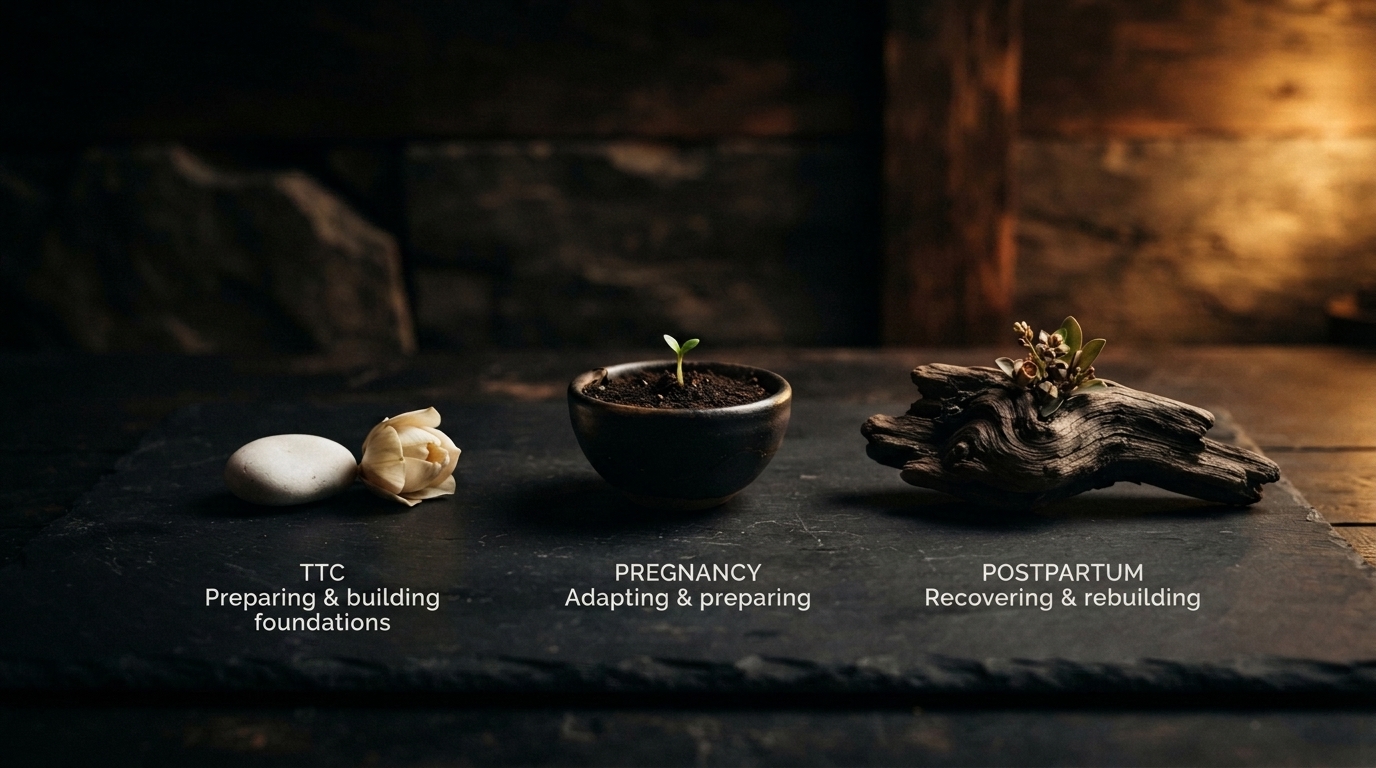
One of the biggest differences between maternal wellness and generic wellness is context. A woman trying to conceive is not experiencing the same needs as a woman in her third trimester, who in turn is not experiencing the same needs as a woman six weeks postpartum. A woman six months postpartum may have completely different priorities from someone immediately after birth.
That means maternal wellness cannot simply be a generic fitness or lifestyle program with the word "mom" added to it. The maternal journey needs to be considered in stages.
Maternal Wellness During TTC
Trying to conceive can involve an entirely different set of physical and emotional considerations.
Maternal wellness during the TTC stage may include:
- Building sustainable movement habits
- Supporting adequate nutrition
- Understanding cycle patterns
- Maintaining healthy routines
- Managing stress
- Prioritizing sleep and recovery
- Preparing physically and mentally for pregnancy
- Building confidence and body awareness
Importantly, wellness does not guarantee conception.
Fertility concerns, irregular cycles, prolonged difficulty conceiving, or suspected reproductive health conditions may require evaluation by a qualified healthcare professional.
The wellness role is different: it can support the everyday foundation around appropriate healthcare.
Maternal Wellness During Pregnancy
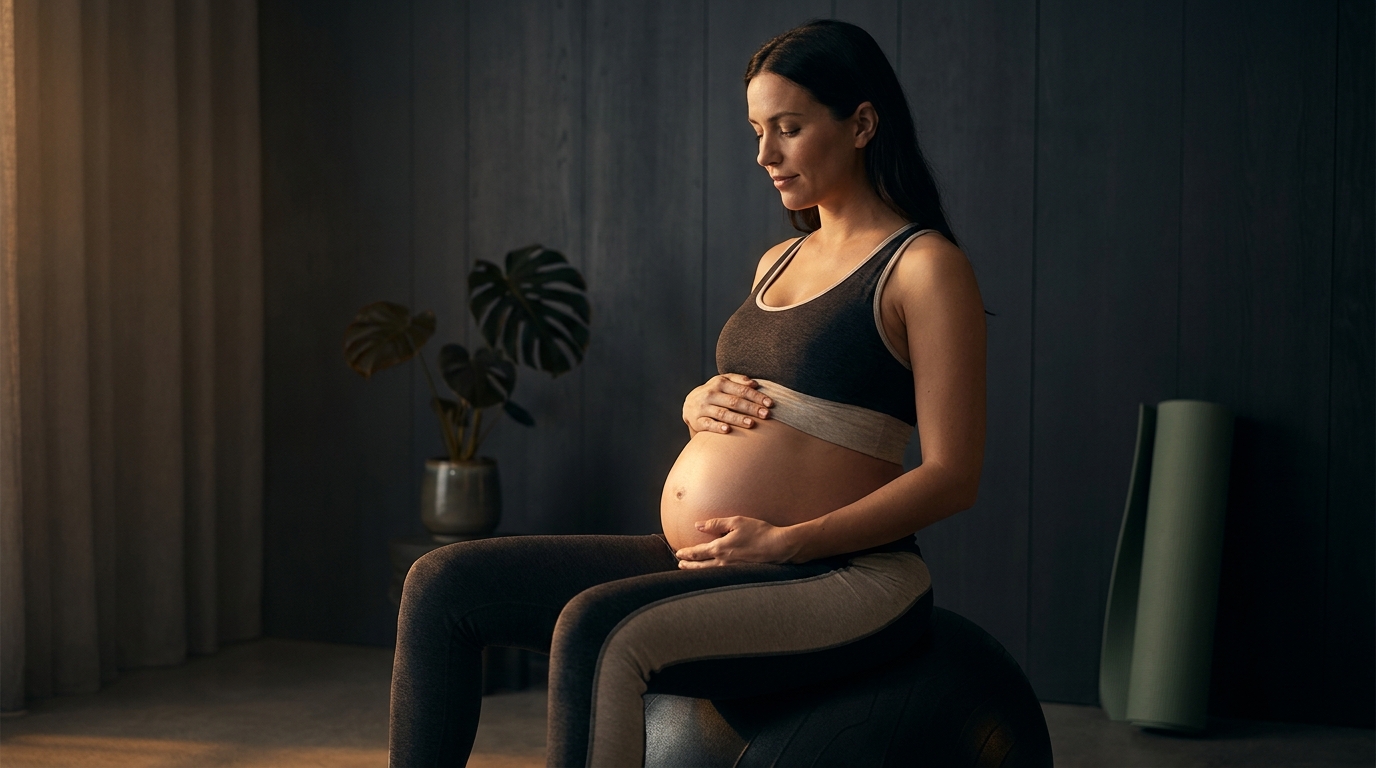
Pregnancy changes the body continuously.
Energy levels can fluctuate. Physical capabilities change. Symptoms change. Nutritional needs change. Sleep can become more difficult. Exercise may need to be modified as pregnancy progresses.
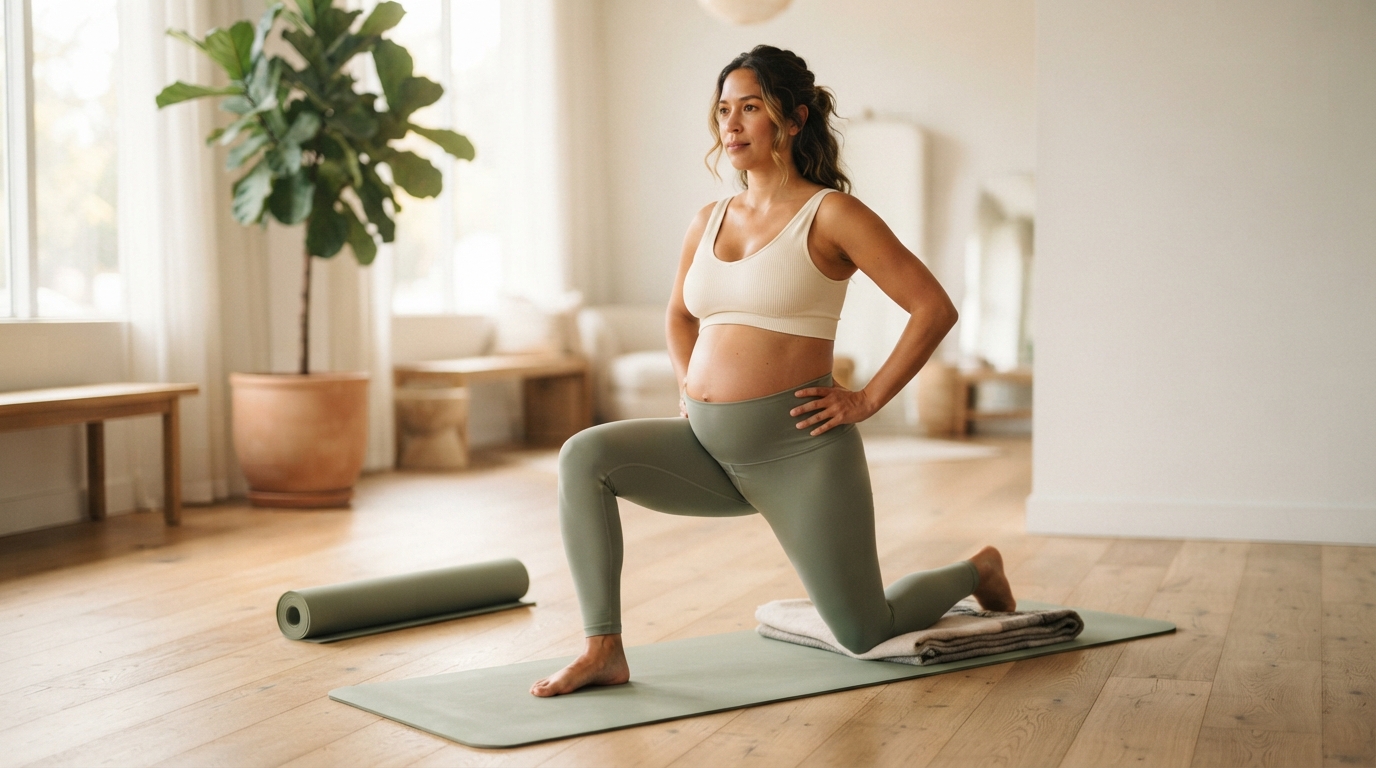
For most women with uncomplicated pregnancies, appropriate physical activity can be part of a healthy pregnancy, while individual medical circumstances may require modifications or restrictions. WHO and ACOG both provide guidance around physical activity during pregnancy and the postpartum period.
Maternal wellness during pregnancy can therefore include:
- Pregnancy-appropriate movement
- Strength and mobility
- Nutrition and hydration
- Rest and recovery
- Stress management
- Body awareness
- Birth preparation
- Emotional wellbeing
- Social connection
- Practical routines
The goal is not to force a woman to maintain her pre-pregnancy routine at all costs.
The goal is to adapt wellness to the woman she is now.
Maternal Wellness During Postpartum
Postpartum is where the distinction between healthcare and wellness becomes especially clear.
Birth is a major physical and emotional transition.
Recovery can involve changes in strength, mobility, energy, sleep, hormones, mood, nutrition, pelvic health, core function, body image, relationships, and daily responsibilities.
Healthcare remains essential.
But wellness can provide another layer of support as a mother navigates everyday recovery.
That can include:
- Gradual return to movement
- Strength and mobility
- Core and pelvic-floor-informed recovery
- Nutrition and hydration
- Sleep and recovery strategies
- Stress management
- Emotional wellbeing
- Rebuilding routines
- Community and social support
- Confidence in everyday movement
ACOG's postpartum guidance specifically recognizes the need to address physical, social, and psychological wellbeing rather than treating postpartum care as a single isolated visit.
WHO likewise emphasizes the importance of postnatal care for women's health and wellbeing after birth.
Postpartum wellness is therefore not simply about "getting your body back."
It is about supporting a woman as she recovers, adapts, and builds a new version of everyday life.
Why Maternal Wellness Is Different From Generic Wellness
Generic wellness often assumes a relatively stable body and lifestyle. Maternal wellness cannot. A mother's energy, physical capacity, recovery needs, nutrition needs, sleep, responsibilities, emotional state, time availability, and priorities can change dramatically across the maternal journey.
That means maternal wellness needs to be stage-aware. A pregnancy workout is not simply a normal workout performed by a pregnant woman. A postpartum recovery program is not simply a weight-loss program with "postpartum" added to the title. A wellness routine for a mother cannot assume that she has unlimited time, predictable sleep, or the same physical capacity she had before pregnancy.
Maternal wellness adapts to motherhood rather than asking motherhood to adapt to the wellness program.
The Everyday Maternal Wellness Layer
Healthcare addresses clinical needs. Maternal wellness addresses the everyday practices and conditions that support wellbeing: how a mother safely uses her body (movement), how she nourishes herself through changing demands (nutrition), how she allows her body and mind to recover (recovery), how she supports emotional and mental health (wellbeing), how she stays connected to people who understand her (connection), how she turns healthy intentions into realistic daily actions (routines), and how she changes those practices as her maternal stage changes (adaptation).
This is not an alternative healthcare system. It is a different layer of maternal support.
A mother can be receiving appropriate healthcare and still need this layer. She can attend her prenatal appointments and still struggle to establish a realistic movement routine. She can receive postpartum medical care and still be unsure how to gradually rebuild strength. She can understand that nutrition matters and still have no idea how to make nourishing meals work with a newborn.
Healthcare asks what clinical care a mother needs. Maternal wellness asks how she can support her wellbeing through everyday practices and routines.
Both questions matter, and they often overlap inside the same appointment, the same week, or the same stage of motherhood.
Where Catalyst Mom Fits
Catalyst Mom operates within this maternal wellness layer.
Catalyst Mom is a wellness, fitness, and nutrition platform designed around three stages of the maternal journey:
Trying to Conceive → Pregnancy → Postpartum
Its current platform combines stage-specific movement, nutrition, wellness tracking, daily guidance, community, and coaching. Its programs and tools are designed to adapt to where a mother is in her journey rather than treating motherhood as one generic fitness category.
That includes tools and resources such as:
- TTC cycle and wellness support
- Pregnancy-specific movement and preparation
- Postpartum recovery
- Core recovery
- Wellness tracking
- Nutrition support
- Daily guidance
- Community
- Coaching and accountability
Catalyst Mom's research materials also describe an evidence-informed approach that draws on guidance from organizations including ACOG and WHO, while explicitly stating that its wellness information is educational and does not replace professional medical advice.
That boundary matters. Catalyst Mom is not a doctor, fertility clinic, OB-GYN practice, or emergency service, and it should never tell a mother to substitute a wellness program for appropriate medical care.
Its role is different: Catalyst Mom translates maternal wellness principles into practical, stage-aware support for everyday motherhood.
From Maternal Wellness to Personalized Maternal Wellness
Generic wellness often assumes that everyone needs the same thing, but motherhood is not one experience. A woman trying to conceive may be focused on cycle awareness and establishing healthy foundations. A pregnant woman may need trimester-appropriate movement and preparation. A new mother may be focused on recovery, energy, nutrition, and rebuilding physical confidence. Even two women in the same stage may have very different needs.
That makes personalization important. A useful maternal wellness system should consider not only "What stage are you in?" but also "What does this particular mother need right now?"
This is where assessment, personalization, progression, and feedback can become more meaningful than a static library of workouts and articles.
A Stage-Based Model of Maternal Wellness
A practical way to think about maternal wellness is:
- Assess. Understand where the mother is in her journey and what her current priorities are.
- Personalize. Identify the areas that deserve attention based on her stage, circumstances, and goals.
- Apply. Give her practical actions she can realistically perform.
- Progress. Adjust those actions as her capacity and circumstances change.
- Reassess. Measure what has changed and determine what she needs next.
This creates a continuous cycle rather than a one-time program.
Stage → Assessment → Personalized Support → Daily Action → Progress → Reassessment
That is a fundamentally different way of thinking about maternal wellness than simply giving every mother the same content library.
What Maternal Wellness Should Never Do
Responsible maternal wellness also requires clear boundaries.
It should never:
- Diagnose a medical condition
- Promise to prevent pregnancy complications
- Replace prenatal or postpartum medical care
- Tell a woman to ignore concerning symptoms
- Present wellness practices as treatment for disease
- Guarantee fertility outcomes
- Treat exercise as appropriate for every pregnancy without considering individual circumstances
- Position a wellness coach as a replacement for a qualified healthcare professional
When medical care is needed, medical care comes first.
That is not a limitation of maternal wellness. It is part of responsible maternal wellness.
Maternal Healthcare + Maternal Wellness + Support
The maternal journey is not one-dimensional.
A more complete model looks like this:
Clinical care. Doctors, midwives, nurses, specialists, therapists, hospitals, fertility professionals, and other healthcare providers. Role: clinical assessment, diagnosis, treatment, monitoring, prevention, and medical management.
Maternal wellness. Movement, nutrition, recovery, routines, wellbeing, education, and healthy behaviors. Role: support everyday wellbeing and sustainable healthy practices.
Community and practical support. Partners, family, friends, peer communities, educators, doulas, support groups, and other sources of connection. Role: help mothers navigate the practical and emotional realities of motherhood.
A mother may need one, two, or all three at different points in her journey. The goal is not to collapse them into one service. The goal is to make the ecosystem work better for the mother.
The Future of Maternal Wellness Is More Integrated
The maternal health conversation is already moving beyond a narrow definition of successful pregnancy.
WHO emphasizes that maternal health should support women and babies in achieving their full potential for health and wellbeing and promotes health across the continuum of pregnancy, childbirth, and postnatal care.
Its maternal wellbeing work also points toward broader dimensions including nutrition, supportive environments, connectedness, autonomy, and resilience.
ACOG's approach to postpartum care similarly recognizes that women need ongoing attention to physical, social, and psychological wellbeing, not simply a single appointment after birth.
Digital maternal platforms are approaching this landscape from different directions. Some emphasize clinical care and provider access. Others focus on tracking, education, expert content, or community. Each model serves a different layer of the maternal journey, and the opportunity is not to pretend those layers are interchangeable.
The opportunity is to make each layer clearer.
So, Which One Does a Mother Need?
Usually, the answer is not either/or. She may need both.
Maternal healthcare provides clinical expertise and medical care when it is needed. Maternal wellness supports the everyday behaviors, routines, physical capacity, recovery, nutrition, wellbeing, and connection that shape life throughout motherhood.
And community provides something neither clinical care nor a wellness program can completely replace: people who understand what the journey feels like.
The healthiest model is therefore not healthcare OR wellness. It is healthcare + wellness + support.
The Bottom Line
Maternal healthcare and maternal wellness answer different questions that should overlap but are not identical.
A mother deserves access to appropriate healthcare when she needs it, and she also deserves support for the thousands of everyday decisions that happen outside a clinical encounter: movement, nutrition, recovery, sleep, stress management, connection, healthy routines, and the ability to adapt as her needs change.
Maternal wellness is not a replacement for maternal healthcare. It is part of the larger picture of maternal wellbeing, and as motherhood changes from TTC to pregnancy to postpartum, the support surrounding a mother should change with it.
The Catalyst Mom Approach
At Catalyst Mom, we believe maternal wellness should be built around the reality of motherhood, not around a generic wellness template.
That means recognizing that TTC isn't pregnancy. Pregnancy isn't postpartum. Postpartum isn't simply "getting your body back."
Your body changes. Your energy changes. Your priorities change. Your routines change. Your wellness needs change.
Catalyst Mom is built around that continuous journey, bringing together stage-aware movement, nutrition, recovery, wellbeing, daily guidance, and community support across TTC, pregnancy, and postpartum.
Our role is not to replace your healthcare team. Our role is to help make maternal wellness more practical, personalized, and sustainable in everyday life.
Because caring for the mother should not stop at the clinic door.
Frequently Asked Questions
What is maternal wellness?
Maternal wellness is the everyday physical, nutritional, emotional, behavioral, and social wellbeing layer of the maternal journey. It includes movement, nutrition, recovery, sleep, stress management, emotional wellbeing, healthy routines, social connection, and the ability to adapt as a woman's needs change through trying to conceive, pregnancy, and postpartum. WHO's maternal wellbeing framework recognizes similar domains, including good health, adequate nutrition, supportive environments, relationships and connectedness, personal autonomy, and resilience.
What is the difference between maternal wellness and maternal healthcare?
Maternal healthcare is the clinical side of supporting a woman's health, including diagnosis, treatment, monitoring, obstetric care, fertility evaluation, and medical management. Maternal wellness is the broader everyday wellbeing layer surrounding that care, including movement, nutrition, recovery, sleep, stress management, and social connection. The two are complementary, not interchangeable. Healthcare answers "Does this need medical attention?" while maternal wellness answers "How do I build healthy, sustainable practices into my actual life?"
Does maternal wellness replace medical care?
No. Maternal wellness should never replace prenatal, obstetric, postpartum, fertility, or mental health care. WHO guidance on self-care is explicit on this point: self-care and wellness practices can support health, but they do not replace health systems or healthcare workers. A responsible maternal wellness program clearly states that its information is educational and does not substitute for professional medical advice. When medical care is needed, medical care comes first.
Why is maternal wellness important during pregnancy?
Pregnancy changes the body continuously. Energy fluctuates, physical capabilities shift, nutritional needs evolve, and sleep can become more difficult. Maternal wellness during pregnancy supports pregnancy-appropriate movement, strength and mobility, nutrition and hydration, rest and recovery, stress management, body awareness, birth preparation, and emotional wellbeing. For most women with uncomplicated pregnancies, appropriate physical activity can be part of a healthy pregnancy, while individual medical circumstances may require modifications or restrictions. WHO and ACOG both publish guidance on physical activity during pregnancy and the postpartum period.
What does postpartum wellness include?
Postpartum wellness can include gradual return to movement, strength and mobility work, core and pelvic-floor-informed recovery, nutrition and hydration, sleep and recovery strategies, stress management, emotional wellbeing, rebuilding daily routines, community and social support, and confidence in everyday movement. ACOG describes postpartum care as an ongoing process rather than a single appointment and recommends attention to physical, social, and psychological wellbeing. Postpartum wellness is not about "getting your body back." It is about supporting a woman as she recovers, adapts, and builds a new version of everyday life.
Can maternal wellness support women trying to conceive?
Yes, but with clear boundaries. Maternal wellness during the TTC stage can include building sustainable movement habits, supporting adequate nutrition, understanding cycle patterns, maintaining healthy routines, managing stress, prioritizing sleep and recovery, and preparing physically and mentally for pregnancy. Wellness does not guarantee conception. Fertility concerns, irregular cycles, prolonged difficulty conceiving, or suspected reproductive health conditions may require evaluation by a qualified healthcare professional. Maternal wellness can support the everyday foundation around appropriate healthcare, not replace it.
What does a maternal wellness program include?
A stage-based maternal wellness program typically includes movement, nutrition, recovery, wellbeing, daily guidance, and community support adapted to where a woman is in her maternal journey. More developed programs add assessment, personalization, progression, and reassessment rather than offering a static library of workouts and articles. A useful program should consider both "What stage are you in?" and "What does this particular mother need right now?" It should also clearly state that it does not diagnose conditions, prevent complications, replace medical care, or guarantee fertility outcomes.
How is maternal wellness different from general wellness?
Generic wellness typically assumes a relatively stable body, schedule, and lifestyle. Maternal wellness cannot. A mother's energy, physical capacity, recovery needs, nutrition needs, sleep, responsibilities, emotional state, time availability, and priorities can change dramatically across TTC, pregnancy, and postpartum. A pregnancy workout is not simply a regular workout performed by a pregnant woman. A postpartum recovery program is not a weight-loss program with "postpartum" added to the title. Maternal wellness adapts to motherhood rather than asking motherhood to adapt to the wellness program.
Sources
- World Health Organization — Maternal health
- World Health Organization — Maternal morbidity and well-being
- World Health Organization — Self-care for health and well-being
- American College of Obstetricians and Gynecologists — Optimizing Postpartum Care
- World Health Organization — WHO recommendations on antenatal care for a positive pregnancy experience
- World Health Organization — Supporting women, parents and families for a positive postnatal experience
Evidence reviewed: August 2026. This article is educational and does not replace professional medical advice.