Leaking when you sneeze. A feeling of heaviness in your pelvis. Not quite trusting your body when you run or jump. These are the most common postpartum pelvic floor complaints, and they're so common that many women assume they're just part of having a baby. They're not. Pelvic floor dysfunction is treatable, and the rehabilitation is something you can start early and do at home.
When you can start
For uncomplicated vaginal deliveries, gentle pelvic floor awareness work can begin within the first few days. Not Kegels exactly, but the ability to find and feel the muscles. You can do this lying in bed or sitting in a chair: try to gently squeeze the muscles you'd use to stop the flow of urine, hold for 2 to 3 seconds, then release. Don't do this while actually urinating on a regular basis, as it can cause urinary retention, but trying it once to identify the right muscles is a common starting point.
After a C-section, the timeline is slightly more conservative. You can start the same gentle awareness work within the first week or two, as long as it doesn't cause discomfort around the incision. The pelvic floor muscles themselves weren't directly affected by the surgery, but the surrounding connective tissue and core muscles were, so the approach is slightly different.
Why Kegels alone aren't enough
Kegels (pelvic floor muscle contractions) are the most prescribed pelvic floor exercise in the world, and they do work for what they do. Research consistently shows that supervised pelvic floor muscle training reduces urinary incontinence in postpartum women. A 2020 Cochrane review found that pelvic floor muscle training reduced the risk of urinary incontinence by about 40% in postpartum women who did it consistently.
The problem is that Kegels only train the contraction. They don't train the relaxation, the coordination with your breath, or the integration with your other core muscles. Many women who do hundreds of Kegels still have symptoms because their pelvic floor is tight and overactive rather than weak. They can squeeze, but they can't fully let go. A tight pelvic floor causes many of the same symptoms as a weak one: urgency, pain during sex, and difficulty with emptying the bladder.
A better pelvic floor routine
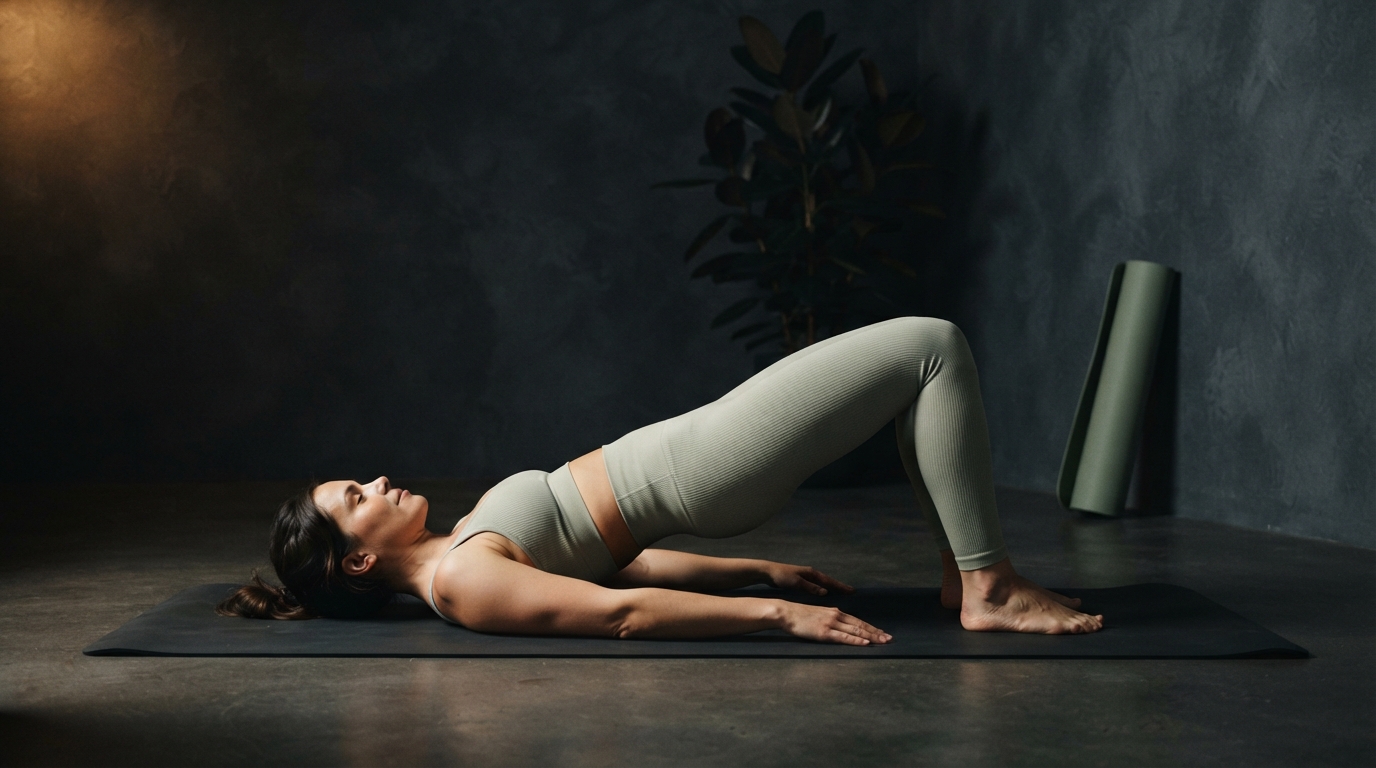
Step one: learn to relax first. Before you do any squeezing, lie on your back with your knees bent and focus on letting go of your pelvic floor completely. Take a deep breath in, and as you exhale, consciously release any tension in that area. Some women find they've been holding tension there for years without realizing it. If you can't fully relax the muscles, you're not ready to train them. Stretching the pelvic floor (sometimes called "reverse Kegels" or pelvic floor drops) is the starting point: on an exhale, gently bear down slightly, as if you're starting to release gas, and feel the muscles lengthen. Hold for 5 seconds, relax, repeat 5 to 10 times.
Step two: coordinate with your breath. On your exhale, gently engage (lift and squeeze) the pelvic floor. On your inhale, let it go completely. The contraction should feel like lifting an internal elevator, not like clamping down hard. You're looking for a controlled, sustained lift, not a quick squeeze-and-release. Hold for 3 to 5 seconds (work up to 10 as you get stronger), then fully release. Rest for 5 to 10 seconds between reps. Do 10 to 15 reps, two to three times per day.
Step three: integrate with movement. Your pelvic floor needs to work with the rest of your body, not just in isolation. Try engaging your pelvic floor before you: pick up your baby, stand up from a chair, cough or sneeze (this is the most practical one; pre-engaging before a sneeze can prevent leaking), and walk up stairs. This translates the exercise into real life, which is where it actually matters.
Step four: progress to loaded movement. Once you can contract and relax the pelvic floor reliably at rest, start doing it during basic exercises: squats, lunges, glute bridges. This teaches the pelvic floor to respond to increased intra-abdominal pressure, which is what happens when you lift, jump, or run.
When to see a pelvic floor physical therapist
If you're doing consistent pelvic floor work for 6 to 8 weeks and not seeing improvement in leaking, heaviness, or pain, see a pelvic floor PT. They can assess whether your issue is weakness, tightness, or poor coordination, and give you a targeted program. They can also do internal assessment (vaginal or rectal) to evaluate muscle tone and function directly, which you can't do on your own. Pelvic floor PT is significantly underutilized in postpartum care in the US, and many women suffer for years with issues that a few sessions of PT could resolve.
Where to go from here
Pelvic floor rehab is most effective when it's part of a full postpartum recovery program. Create a free Catalyst Mom account to get guided pelvic floor routines integrated with your postpartum workout plan.
Frequently Asked Questions
How long does it take for pelvic floor exercises to work?
Most women notice some improvement in symptoms within 3 to 4 weeks of consistent daily practice. Meaningful improvement (fewer leaks, less heaviness, better control) typically takes 8 to 12 weeks. Full recovery depends on the severity of the initial dysfunction and how consistently you do the exercises.
Can I do pelvic floor exercises too much?
Yes. Over-training the pelvic floor (doing hundreds of Kegels per day without adequate rest) can lead to tightness, pain, and difficulty relaxing the muscles. Quality and consistency matter more than quantity. Two to three sets of 10 to 15 reps per day is the standard recommendation.
Should I use a pelvic floor training device?
Biofeedback devices that show you whether you're contracting the right muscles can be helpful for women who aren't sure they're doing Kegels correctly. They're not necessary for everyone. Weighted vaginal cones and electrical stimulation devices exist too, but these are best used under the guidance of a pelvic floor PT rather than on your own.
Is leaking normal after having a baby?
Leaking is common, but that doesn't mean it's something you have to live with permanently. Up to 30% of women experience some urinary incontinence at 6 months postpartum. With proper pelvic floor rehabilitation, that number drops significantly. If you're still leaking at 6 months despite doing the exercises, see a pelvic floor PT.
Can the pelvic floor be too tight instead of too weak?
Absolutely. Hypertonic (overly tight) pelvic floor muscles cause many of the same symptoms as weak ones: leaking, urgency, pain during sex, and difficulty with urination. If Kegels make your symptoms worse, tightness is likely the issue, and you should focus on relaxation and lengthening exercises instead.