Maternal wellness is often discussed as if motherhood were one fixed stage.
There are endless lists of things women are told to do: move more, eat well, get enough sleep, manage stress, take care of yourself, stay active, make time for yourself.
The advice may be reasonable. The problem is the assumption underneath it.
A woman trying to conceive is not experiencing the same body, priorities, demands, or circumstances as a woman in late pregnancy. A woman six weeks postpartum is not living the same reality as a woman a year after birth.
So why does so much wellness advice treat "moms" as one category?
Maternal wellness needs context. It needs to understand where a woman is in her journey, what has changed, what she needs now, and what is realistically possible in her current life.
That is what it means for maternal wellness to be stage-aware.
Maternal Wellness Is Not One Continuous Set of Instructions
The maternal journey is continuous, but the needs within it are not static.
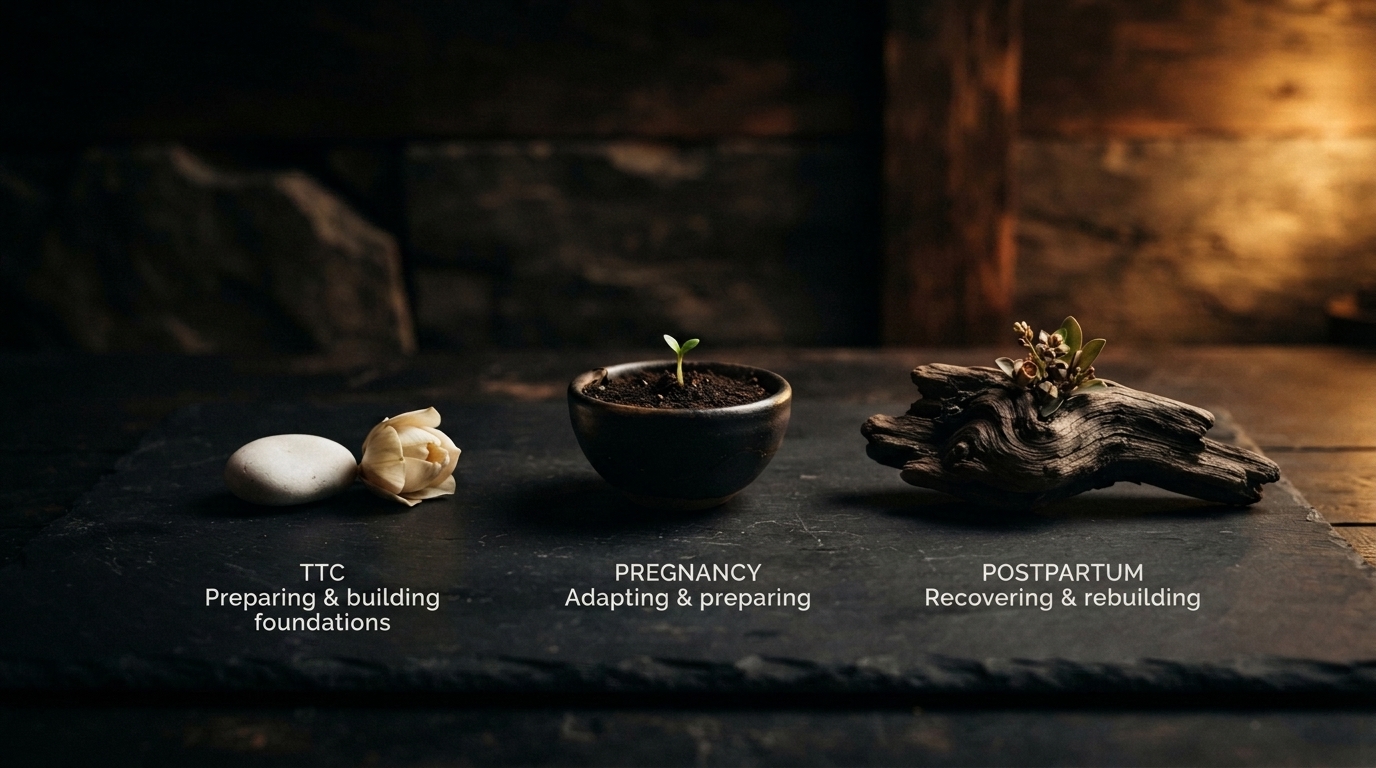
Trying to conceive can involve cycle awareness, fertility concerns, preparing for pregnancy, establishing healthy routines, and managing the emotional uncertainty that can come with the process.
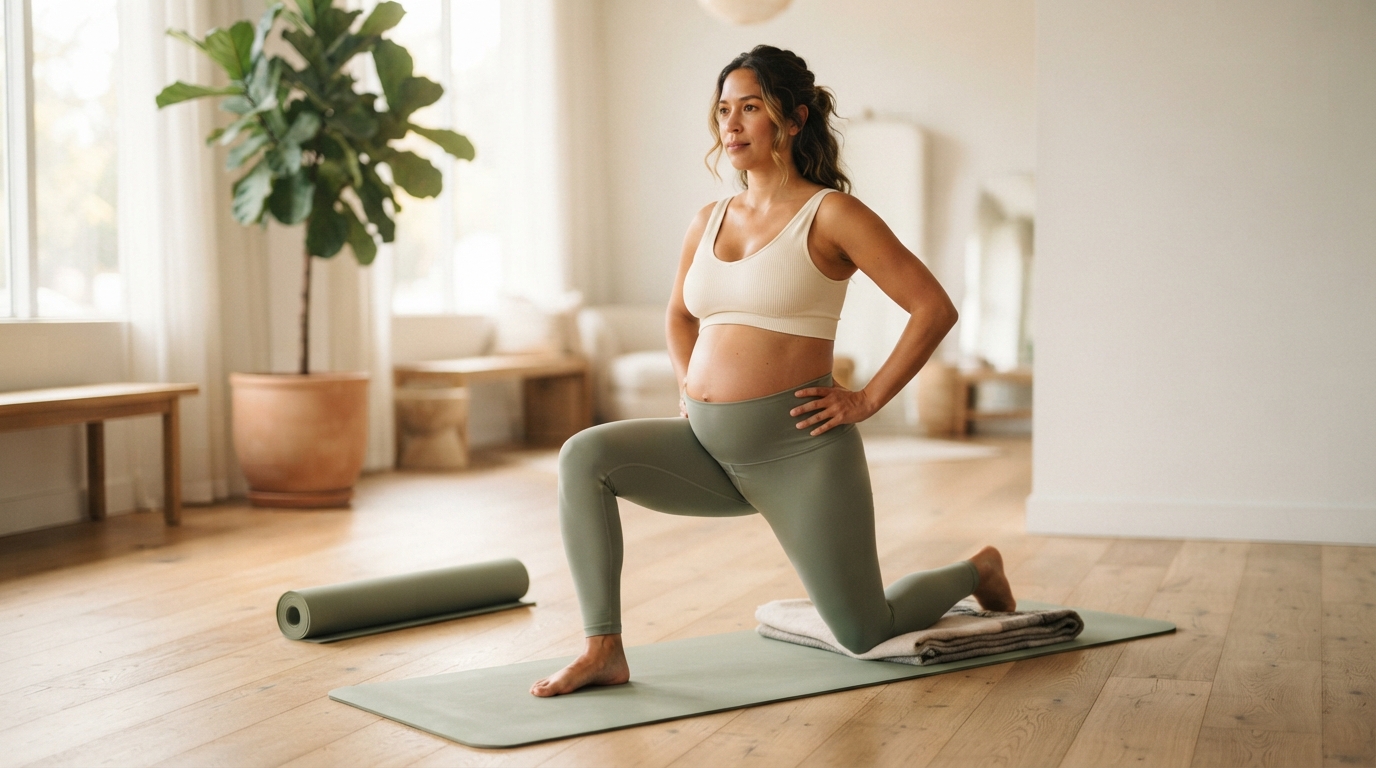
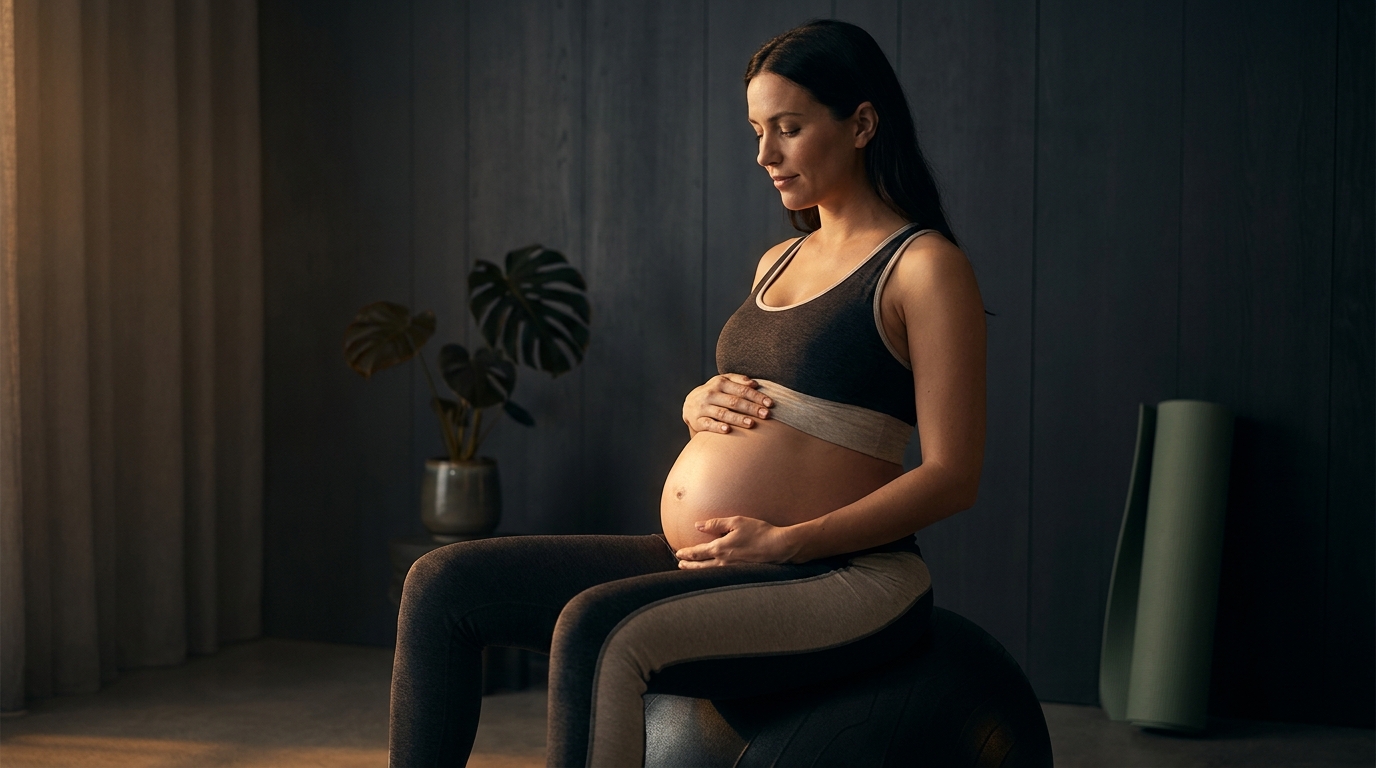
Pregnancy introduces a changing body, changing physical capabilities, changing nutritional needs, and different considerations around movement and recovery.
Postpartum brings another major transition. A woman is recovering from birth while adapting to new responsibilities, disrupted sleep, changing routines, and the physical and emotional demands of caring for a baby.
These stages overlap, but they are not interchangeable.
WHO defines maternal health across pregnancy, childbirth, and the postnatal period and emphasizes that successful maternal health involves more than survival. Health and wellbeing matter too.
That broader view makes an important point: the maternal journey is not simply a medical timeline. It is a changing experience of health and wellbeing.
The Same Advice Can Mean Different Things at Different Stages
Consider movement.
"Stay active" sounds simple. But staying active while trying to conceive, staying active during pregnancy, and returning to movement after birth are not the same task.
The same is true for nutrition. The same is true for recovery. The same is true for sleep. The same is true for stress management. Even the meaning of "self-care" changes.
A woman who is trying to conceive may be building routines around a relatively stable schedule. A pregnant woman may be adapting those routines around changing energy, symptoms, and physical capacity. A new mother may have very little control over when she sleeps, eats, exercises, or gets time alone.
The principle can stay the same while the practical application changes completely.
That is why maternal wellness has to be stage-aware.
Stage-Aware Does Not Mean One More Set of Checklists
It would be easy to respond by creating three separate programs: a TTC program, a pregnancy program, and a postpartum program.
That is better than treating every woman the same. But it still misses something important.
Two women can be in the same stage and need very different support.
One pregnant woman may be active and confident. Another may be returning to movement after a long period of inactivity. One postpartum mother may have significant support at home. Another may be carrying most of the daily responsibilities herself. One woman trying to conceive may be focused on building healthy foundations. Another may be navigating fertility treatment and a very different emotional and medical context.
So stage matters. But stage alone is not enough.
Maternal wellness has to account for the individual woman within the stage.
From Stage-Based to Personalized
This changes the question.
Instead of asking "What should women at this stage do?" we can ask "What does this woman need at this stage?"
That is a much more useful question. It moves maternal wellness away from generic content and toward personalization.
A useful system needs to understand at least two things: Where are you? And: What do you need right now?
That does not mean pretending a wellness platform can diagnose a woman's health or replace clinical care. It means recognizing that there is a meaningful difference between giving everyone the same information and helping someone apply appropriate wellness principles to her own circumstances.
Why Personalization Requires Reassessment
Needs change. That sounds obvious, but it has major implications for how maternal wellness should be designed.
A program that recommends something today may not be the right recommendation weeks or months later. A woman's stage can change. Her energy can change. Her physical capacity can change. Her goals can change. Her routines can change. Her support system can change. Her priorities can change.
That means personalization cannot be a one-time questionnaire. It needs feedback. It needs progression. And eventually, it needs reassessment.
A more useful model looks like:
Stage → Assessment → Personalized Support → Daily Action → Progress → Reassessment
Then the cycle begins again.
The point is not to constantly measure a mother for the sake of measuring her. The point is to recognize that wellness is a moving target because motherhood is a moving experience.
Postpartum Makes the Case Especially Clear
Postpartum care illustrates why stage-aware support matters.
ACOG describes postpartum care as an ongoing process rather than a single encounter and recommends support tailored to each woman's individual needs. Its guidance includes physical, social, and psychological wellbeing, including mood, sleep and fatigue, physical recovery, infant care and feeding, and other aspects of health.
WHO similarly emphasizes the importance of a positive postnatal experience and support for women's health and wellbeing after birth.
The point is not that postpartum wellness replaces postpartum healthcare. It does not. The point is that a woman's needs continue to evolve after the clinical encounter.
She is still learning how her body feels. She is still rebuilding routines. She is still adapting to a new identity and new responsibilities. She may be trying to understand how to move again, how to eat consistently, how to recover, how to sleep when sleep is unpredictable, and how to care for herself while caring for someone else.
That is precisely the kind of context that a stage-aware wellness model needs to recognize.
Maternal Wellness Should Adapt to the Mother
This is one of the principles we keep coming back to at Catalyst Mom:
The woman should not have to adapt herself to a generic wellness program. The wellness program should adapt to the realities of the woman.
That means moving away from rigid expectations. It means recognizing that a successful routine during TTC may look different from a successful routine during pregnancy. It means understanding that postpartum progress should not be defined by how quickly a woman returns to her pre-pregnancy body. And it means making room for the fact that real life is messy.
A mother may miss a workout. She may sleep badly. She may have a difficult week. She may have less energy than expected. A stage-aware system should be able to respond to those realities instead of treating them as failures.
How the Catalyst Mom Method™ Works Across the Maternal Journey
The Catalyst Mom Method™ is a stage-specific maternal wellness framework spanning trying to conceive, pregnancy, and postpartum. It adapts its focus as the mother's body, needs, and circumstances change.
These three stages are not interchangeable. A woman trying to conceive is in a different physical and emotional context than a woman in her third trimester, who is in a different context again from a woman recovering from birth. The Method spans all three. Its most specialized rehabilitation work sits in the postpartum stage, but the framework itself covers the entire maternal journey.
Instead of treating maternal fitness like a generic workout program, the Method focuses on how the body changes across these three stages and how movement, nutrition, recovery, and wellbeing should change with it.
The goal is not to make a mother train harder. It is to help her move better, build support from the inside out, and progress in a way that matches the stage she is actually in.
The Method adapts its focus across each stage of the maternal journey, with the depth and type of support changing as maternal needs change.
The TTC Stage: Foundational Wellness
Trying to conceive is a foundational stage. The body is preparing for a potential pregnancy, and the focus is on building healthy routines that will support conception, pregnancy, and recovery later. The Method's TTC principles include:
Cycle-aware movement. Movement that works with a woman's cycle rather than against it, supporting hormonal balance and overall readiness for pregnancy.
Foundational nutrition. Eating patterns that build the nutrient reserves pregnancy will eventually draw on, rather than restrictive dieting that can work against conception.
Stress and sleep support. Stress management and sleep quality matter for hormonal balance and overall wellbeing during TTC. The Method treats these as active priorities, not afterthoughts.
Body preparation. Building baseline strength, mobility, and core function before pregnancy, so the body enters pregnancy in a stronger starting position.
Wellness does not guarantee conception. Fertility concerns, irregular cycles, or suspected reproductive health conditions require evaluation by a qualified healthcare professional. The Method's role at this stage is to support the everyday foundation around appropriate medical care.
The Pregnancy Stage: Adaptive Movement
Pregnancy is an adaptive stage. The body is changing continuously, and the focus is on adapting movement, nutrition, and recovery to those changes rather than forcing a pre-pregnancy routine. The Method's pregnancy principles include:
Trimester-adapted movement. Movement that adjusts across the first, second, and third trimesters as the belly grows, the center of gravity shifts, and physical capabilities change.
Pressure management as the belly grows. Learning to coordinate breath and pressure becomes more important as pregnancy progresses and the midline stretches. The same pressure management principles that matter in postpartum recovery start here.
Birth preparation. Movement and breathing patterns that support physical readiness for labor and delivery, including mobility, positioning, and breath work.
Recovery groundwork. The strengthening and breath work done during pregnancy lays the foundation for postpartum recovery. Women who build deep core connection and pressure management during pregnancy often have a stronger starting point for recovery after birth.
Individual medical circumstances may require modifications or restrictions during pregnancy. The Method's pregnancy programming is designed to work alongside prenatal care, not replace it.
The Postpartum Stage: Core Rehabilitation and Recovery
Postpartum is where the Method's most specialized work lives. After birth, the body is recovering from a major physical event, and the deep core, pelvic floor, and midline need specific, progressive rehabilitation. This is where the Method goes deepest, because this is where the most distinctive rehabilitation work is needed. The Method's seven core rehabilitation principles apply at this stage:
Deep core rehabilitation. Progressive core-focused movement designed to support abdominal function and reduce inter-rectus distance, instead of loading the midline with traditional crunches and sit-ups that drive pressure outward.
Pelvic floor function. Coordinated breathing, pressure management, and pelvic-floor work designed to improve function and address common postpartum symptoms such as urinary leakage during everyday movements like sneezing, lifting, jumping, and running.
Breath-pressure management. Training the body to recognize and manage abdominal pressure during movement, including patterns associated with visible coning or doming.
Short, daily routines. Twelve to twenty minutes a day on the floor next to the baby, rather than hour-long gym sessions that do not fit a real mother's life.
Birth-type customization. Different recovery pathways for vaginal birth and C-section, because the body heals differently and the support should reflect that.
These postpartum principles are detailed below. They are the postpartum layer of the Method, not the whole Method. The Method is the three-stage framework spanning TTC, pregnancy, and postpartum. The core rehabilitation work is what makes the postpartum stage the most specialized layer within that framework.
The Seven Core Rehabilitation Principles (Postpartum Stage)
These are the principles that make the Method's postpartum work distinctive. They are the reason the Method gets results where generic postpartum ab programs fail.
1. Pressure Management
Traditional crunches, sit-ups, and standard planks raise pressure inside the abdomen. With a healthy core, that pressure is contained. With a stretched or healing midline, it gets forced forward, producing the visible ridge known as coning or doming. The Method emphasizes learning to coordinate breath and pressure, recognizing movement patterns associated with coning or doming, and replacing them with progressions that build control before load. This is especially important during early postpartum, when the midline is still healing.
2. The Internal Corset
The Method teaches deep core breathing and bracing that fires the transverse abdominis, the deep abdominal muscle that wraps around the torso like an internal corset. Instead of working the surface muscles that bulge outward, the Internal Corset trains the deep muscles that draw in and stabilize from the inside out. This is the foundational pattern that lets a mother manage pressure safely during movement, and it is the proprietary concept that distinguishes the Method from generic postpartum ab programs.
3. Pelvic Floor Integration
Breathing, abdominal pressure, and pelvic floor function are connected parts of movement, not isolated muscle groups. The Method trains the pelvic floor to work with the breath and the deep core as one coordinated system, which is how it functions in real life. This coordinated approach is designed to improve pelvic floor function and address common postpartum symptoms such as urinary leakage during everyday movements like sneezing, lifting, jumping, and running. Isolating the pelvic floor with endless Kegels misses the point. The pelvic floor needs to coordinate with everything else.
4. Stage-Specific Progression
Even within the postpartum stage, recovery progresses through phases. Early postpartum focuses on gentle reconnection and breath work. Mid-recovery builds capacity and control. Later postpartum integrates load and functional movement. The Method adjusts movement priorities and progression based on where a woman is in her recovery, not just on the fact that she is postpartum.
5. Birth-Specific Recovery
A vaginal delivery and a C-section create different recovery needs. After a C-section, scar tissue and an incision through the abdominal wall mean recovery needs extra time on gentle pressure management and scar mobility before any loading. After a vaginal birth, the priority is coordinating the core with a pelvic floor that took the brunt of delivery. The Method adjusts its pacing and emphasis based on how a mother gave birth, instead of handing every postpartum woman the same routine.
6. Micro-Workouts
The Method replaces hour-long gym sessions with short, focused routines, typically 12 to 20 minutes, designed to fit into a real mother's day. Consistency matters more than intensity. A movement practice a mother can actually sustain beats a perfect program she never has time to do. Twelve focused minutes a day on the floor next to the baby produces more progress than an hour-long workout she gets to once a week, if she is lucky.
7. Functional Restoration
The Method is not training for the sake of training. It rebuilds core function, posture, mobility, strength, and movement patterns that translate into everyday life. Lifting the baby with a core that supports the load. Carrying the car seat without back pain. Standing up from the floor with control. Moving through a full day with a body that supports itself from the inside out. That is what functional restoration means, and it is the point of the postpartum work.
How the Method Is Personalized
The three-stage framework and the stage-specific principles above are the Method itself. They are what make it work.
Around the Method, Catalyst Mom adds a personalization layer that helps each mother focus on the right stage, the right principles, and the right progression for her current situation. This is how the Method gets applied to an individual woman rather than delivered as a one-size-fits-all program.
The personalization layer works as a connected cycle:
Assess → Identify → Personalize → Apply → Progress → Reassess
1. Assess
Understand the woman's stage, current state, goals, and wellness needs. This is a wellness assessment, not a diagnostic medical evaluation. It helps surface where she is starting from and what areas may deserve attention.
This is where assessment becomes useful. Catalyst Mom's Maternal Wellness Score™ is designed to help identify areas of focus and provide a more personalized starting point.
2. Identify
Surface areas that may need attention or improvement. This could include movement patterns, deep core connection, pelvic floor function, mobility, recovery, nutrition, routines, or other dimensions of maternal wellness. The point is to make the right next step visible rather than asking her to guess.
3. Personalize
Build an appropriate wellness path based on her stage, birth type, and identified needs. Instead of giving every mother the same program, the Method can guide her toward the workouts, nutrition guidance, recovery practices, educational resources, and wellness routines that fit her current situation.
4. Apply
Put the personalized path into action through the stage-specific principles. For a woman in TTC, that means cycle-aware movement, foundational nutrition, and body preparation. For a woman in pregnancy, that means trimester-adapted movement, pressure management, and birth preparation. For a woman in postpartum, that means the seven core rehabilitation principles. Across all three stages, the Method translates wellness principles into practical daily action a mother can realistically perform in 12 to 20 minutes.
5. Progress
Track changes and build capacity over time. A mother's energy, physical capacity, recovery, and priorities shift across the maternal journey, and the Method is designed to recognize and respond to that progression.
6. Reassess
Understand what has changed and determine what comes next. Reassessment is what turns a one-time program into an adaptive system. The cycle then begins again, informed by what the mother has actually done and where she now stands.
That is the difference between giving a mother a library of workouts and giving her a method.
What the Catalyst Mom Method™ Is Not
The Catalyst Mom Method™ is a stage-specific maternal wellness framework built by experts in maternal fitness, core rehabilitation, and postpartum recovery. It is designed to support women across three stages: trying to conceive, pregnancy, and postpartum. Within the postpartum stage, it includes a progressive core rehabilitation framework designed to support abdominal function, reduce inter-rectus distance, improve pelvic floor function, and rebuild deep core strength.
It is not a diagnostic medical system. Its assessments surface wellness needs, readiness, and progress, but they do not diagnose medical conditions or replace clinical evaluation.
The Method works alongside healthcare, not instead of it. When a situation requires medical assessment, diagnosis, treatment, or specialized clinical care, qualified healthcare professionals should take the lead. The Method does not replace prenatal care, postpartum medical care, fertility care, mental healthcare, or emergency services.
That boundary does not limit the Method. It defines its role: helping women turn maternal wellness principles into personalized, practical action across TTC, pregnancy, and postpartum.
From Information to Application
There is no shortage of maternal health information. The challenge is often turning information into something a woman can realistically apply.
A mother can know that movement matters without knowing what an appropriate routine looks like for her current stage. She can know that nutrition matters without knowing how to make nourishing choices work in an unpredictable schedule. She can know that recovery matters without knowing how to balance recovery with the demands of everyday motherhood.
This is where translation matters.
Evidence tells us what is known. Healthcare professionals help determine what is clinically appropriate. Maternal wellness can help translate healthy principles into practical everyday action.
Maternal wellness and maternal healthcare are complementary, not interchangeable. We explored that distinction in more depth in our piece on maternal wellness vs. maternal healthcare.
That is the space Catalyst Mom is interested in building.
A Better Way to Think About Maternal Wellness
Instead of asking whether maternal wellness is about fitness, nutrition, self-care, mental wellbeing, or recovery, it may be more useful to think of it as a system that connects them.
Movement affects how a woman uses and experiences her body.
Nutrition supports the demands placed on that body.
Recovery gives the body and mind space to adapt.
Wellbeing accounts for emotional and mental health.
Community reduces isolation and provides connection.
Personalization makes the support relevant.
Reassessment recognizes that needs change.
Together, those pieces form something more useful than a static list of recommendations. They form a way of supporting a woman through change.
The Future of Maternal Wellness Is Adaptive
Maternal wellness does not need to compete with healthcare. It needs to become more thoughtful about what its own role is.
That means moving beyond generic advice and toward support that is stage-aware, personalized, practical, progressive, and adaptive, grounded in clear boundaries.
The maternal journey is not one moment. It is a continuum. And the support surrounding a woman should be able to move with her.
The Bottom Line
Maternal wellness cannot be truly personalized if it ignores stage.
TTC is not pregnancy. Pregnancy is not postpartum. Postpartum is not simply a return to the person a woman was before she became a mother.
Every stage changes the context. Every woman brings her own circumstances. And those circumstances can change again.
That is why maternal wellness needs more than content. It needs a framework.
At Catalyst Mom, that framework is the Catalyst Mom Method™.
A stage-aware approach to maternal wellness built around assessment, personalization, practical action, progression, and reassessment.
Because the goal is not to give every mother more advice.
The goal is to help her understand what support makes sense for her, where she is, right now.
Frequently Asked Questions
What does stage-aware maternal wellness mean?
Stage-aware maternal wellness recognizes that a woman's needs change dramatically across the maternal journey. A woman trying to conceive is not experiencing the same body, priorities, or circumstances as a woman in late pregnancy, and a woman six weeks postpartum is not living the same reality as a woman a year after birth. Stage-aware wellness adapts its recommendations to where a woman actually is, rather than treating all mothers as one generic category.
Why can't maternal wellness be one generic program for all moms?
Because the practical application of wellness changes completely at different stages. Staying active while trying to conceive, staying active during pregnancy, and returning to movement after birth are not the same task. The same is true for nutrition, recovery, sleep, and stress management. A generic program that tells every mother the same thing ignores the context that determines whether the advice is actually useful.
How do maternal wellness needs change across TTC, pregnancy, and postpartum?
Trying to conceive can involve cycle awareness, fertility concerns, and establishing healthy foundations. Pregnancy introduces a changing body, changing physical capabilities, and shifting nutritional needs. Postpartum brings recovery from birth, disrupted sleep, new responsibilities, and the physical and emotional demands of caring for a baby. These stages overlap but are not interchangeable, and the support a woman needs should reflect that.
What is the difference between stage-based and personalized maternal wellness?
Stage-based wellness groups women by where they are in the maternal journey (TTC, pregnancy, or postpartum). Personalized wellness goes further by accounting for the individual woman within that stage. Two women in the same stage may need very different support based on their activity level, support system, medical context, and goals. Stage alone is not enough. A useful system needs to understand both where a woman is and what she specifically needs right now.
Why does maternal wellness need reassessment?
Because needs change. A woman's stage, energy, physical capacity, goals, routines, support system, and priorities can all shift over weeks or months. A program that recommends something today may not be the right recommendation later. Reassessment is what turns a one-time questionnaire into an adaptive system. The model is Stage, Assessment, Personalized Support, Daily Action, Progress, Reassessment, and then the cycle begins again.
What is the Catalyst Mom Method?
The Catalyst Mom Method™ is a stage-specific maternal wellness framework spanning trying to conceive, pregnancy, and postpartum. It adapts its focus as the mother's body, needs, and circumstances change. The TTC stage focuses on foundational wellness: cycle-aware movement, foundational nutrition, stress and sleep support, and body preparation. The pregnancy stage focuses on adaptive movement: trimester-adapted movement, pressure management as the belly grows, birth preparation, and recovery groundwork. The postpartum stage is where the Method goes deepest, with seven core rehabilitation principles focused on deep core rehabilitation, pelvic floor function, breath-pressure management, birth-specific recovery, micro-workouts, and functional restoration. The depth of specialization differs by stage, because the body's needs differ by stage. Around the Method itself, Catalyst Mom adds a personalization layer (Assess, Identify, Personalize, Apply, Progress, Reassess) that helps each mother focus on the right stage and principles for her current situation.
Does the Catalyst Mom Method cover TTC and pregnancy, or just postpartum?
The Catalyst Mom Method™ spans all three stages of the maternal journey: trying to conceive, pregnancy, and postpartum. The TTC stage focuses on foundational wellness: cycle-aware movement, foundational nutrition, stress and sleep support, and body preparation. The pregnancy stage focuses on adaptive movement: trimester-adapted movement, pressure management as the belly grows, birth preparation, and recovery groundwork. The postpartum stage is where the Method goes deepest, with seven core rehabilitation principles focused on deep core and pelvic floor recovery. The depth of specialization differs by stage, because the body's needs differ by stage. The postpartum core rehabilitation work is the most specialized part of the Method, but the framework itself spans the entire maternal journey, not just recovery after birth.
What is the Internal Corset?
The Internal Corset is the proprietary core concept in the Catalyst Mom Method™. It refers to the deep core breathing and bracing pattern that fires the transverse abdominis, the deep abdominal muscle that wraps around the torso. Instead of working the surface muscles that bulge outward during traditional crunches, the Internal Corset trains the deep muscles that draw in and stabilize from the inside out. This is the foundational pattern that lets a mother manage pressure safely during movement, especially during pregnancy and postpartum recovery.
Does the Catalyst Mom Method help with diastasis recti?
Yes. Supporting abdominal function and reducing inter-rectus distance is one of the core outcomes the Catalyst Mom Method™ is built to produce. The Method uses progressive core-focused movement, breath-pressure management, and the Internal Corset pattern to rebuild the deep abdominal muscles that stretched and separated during pregnancy. It deliberately avoids traditional crunches, sit-ups, and standard planks, which raise intra-abdominal pressure and drive that pressure outward into a stretched midline. The Method is built by experts in maternal fitness and core rehabilitation, and it adjusts its approach based on birth type, since vaginal and C-section recoveries have different needs. Current research supports exercise-based postpartum interventions for improving measures of inter-recti distance, though evidence on specific protocols is still developing, and individual results vary.
Does the Catalyst Mom Method help with pelvic floor leaking?
Yes. Improving pelvic floor function is a core focus of the Catalyst Mom Method™. The Method reconnects breath, core, and pelvic floor control so that everyday movements like sneezing, lifting, jumping, and running are better supported. Rather than isolating the pelvic floor with endless Kegels, the Method trains the pelvic floor to work with the breath and the deep core as one coordinated system, which is how it functions in real life. Current research has found moderate-certainty evidence that structured pelvic-floor muscle training can reduce the odds of urinary incontinence, and the Method incorporates that evidence into its approach. Individual results vary, and the Method is designed to complement, not replace, clinical pelvic health care when that is needed.
Does the Catalyst Mom Method replace medical care?
No. The Catalyst Mom Method™ is a maternal wellness and movement framework, not a diagnostic medical system. Its assessments surface wellness needs, readiness, and progress, but they do not diagnose medical conditions or replace clinical evaluation. The Method works alongside healthcare, not instead of it. When a situation requires medical assessment, diagnosis, treatment, or specialized clinical care, qualified healthcare professionals should take the lead. The Method does not replace prenatal care, postpartum medical care, fertility care, mental healthcare, or emergency services. That boundary does not limit the Method. It defines its role: helping women turn maternal wellness principles into personalized, practical action across TTC, pregnancy, and postpartum.
What does the Catalyst Mom Method assessment actually do?
The assessment is a wellness assessment, not a diagnostic medical evaluation. It helps surface where a woman is starting from, what stage she is in, what her goals are, and what areas may benefit from attention. This could include movement patterns, deep core connection, pelvic floor function, mobility, recovery, nutrition, routines, or other dimensions of maternal wellness. The point is to make the right next step visible rather than asking every mother to guess which workouts, nutrition guidance, or recovery practices apply to her situation. That information then shapes a more personalized path through the platform.
How is stage-aware maternal wellness different from generic wellness?
Generic wellness assumes a relatively stable body, schedule, and lifestyle. Stage-aware maternal wellness recognizes that a mother's energy, physical capacity, recovery needs, sleep, responsibilities, and time availability can change dramatically across TTC, pregnancy, and postpartum. A stage-aware system adapts to those realities instead of asking the mother to adapt to a rigid program. It can respond to missed workouts, bad sleep, and difficult weeks without treating them as failures.
Sources
- World Health Organization — Maternal health
- World Health Organization — Maternal Health Unit: Maternal morbidity and well-being
- World Health Organization — Supporting women, parents and families for a positive postnatal experience
- American College of Obstetricians and Gynecologists — Optimizing Postpartum Care
Evidence reviewed: August 2026