Short answer: not yet — and maybe not for a while. The plank is one of the most common exercises that quietly keeps diastasis recti open. Here's when it's a problem, and how to earn your way back to it.
Why planks are risky with a separation
A plank asks your whole core to resist gravity while your abdomen is under high pressure. With an intact core, the deep muscles contain that pressure. With diastasis recti, the weak midline gives way and the pressure pushes forward — you'll often see coning, that ridge popping up along your belly. Every rep like that reinforces the separation.
The test that decides it
Do a quick check: on hands and knees or lying down, gently brace as if to hold a plank and watch your midline. If it domes up, the plank is too much right now. If you can hold a gentle brace and your belly stays flat, you may be ready for modified versions.
What to do instead (for now)
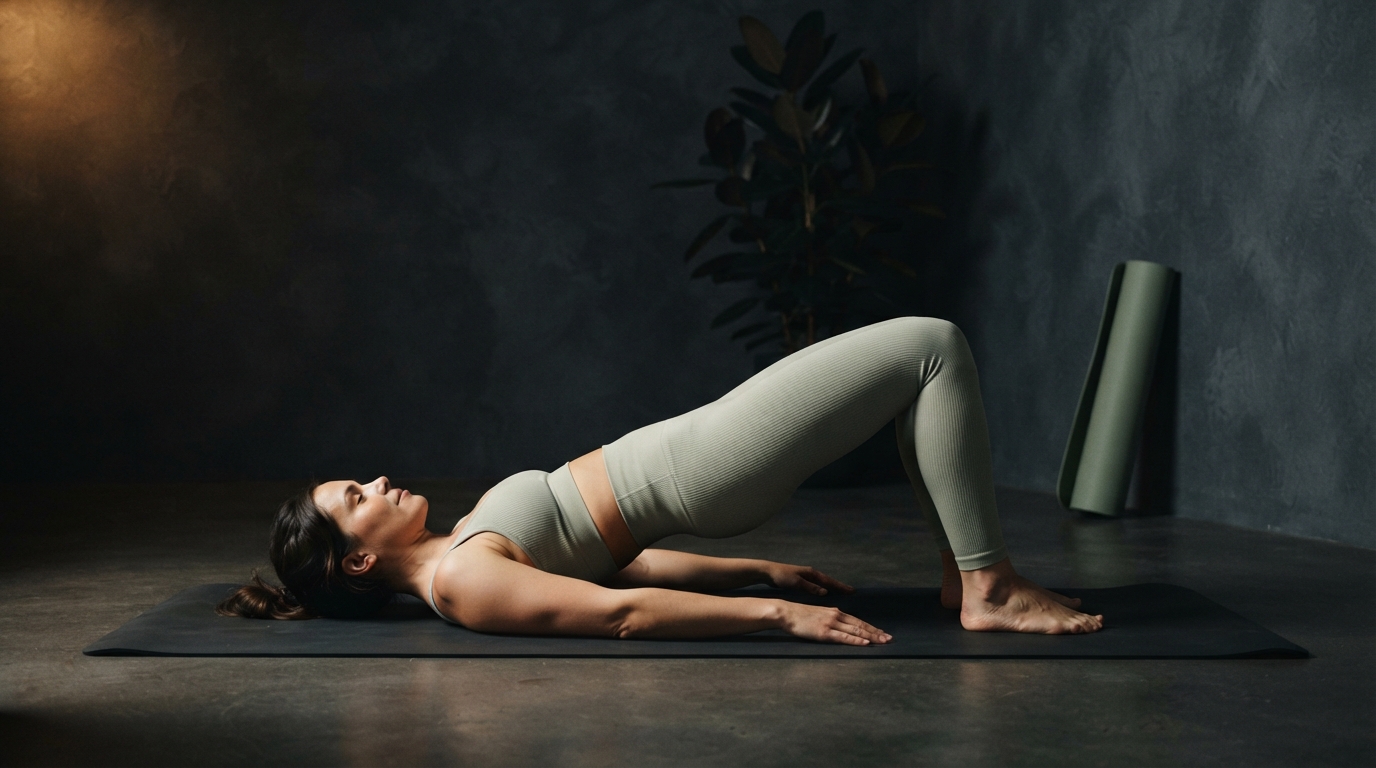
- Deep-core breathing — exhale and draw the belly flat to wake the deep abdominal muscles
- Heel slides and toe taps while holding that flat brace
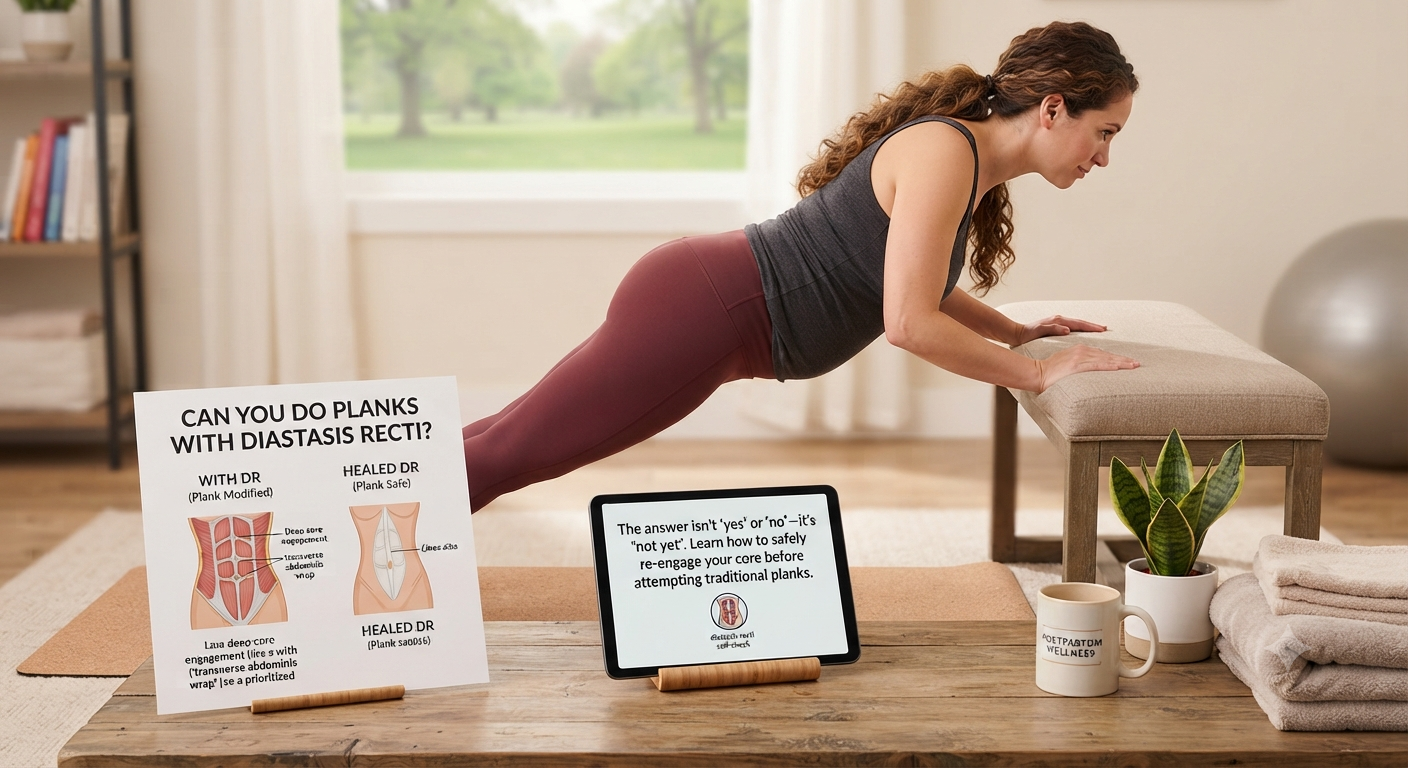
- Incline planks with your hands elevated on a counter — far less pressure than a floor plank
- Bird-dog with a neutral spine and no doming
How to earn the plank back
Progress in this order: master the exhale-brace, then work incline planks from high to low over several weeks (counter, then a sturdy chair, then the floor), watching for coning at every step. When you can hold a full plank with a flat midline and no doming, you've earned it. That's usually weeks of deep-core work, not days.
The bottom line
Planks aren't banned forever — they're just too advanced while the gap is open. Rebuild the deep core first, use the coning test as your traffic light, and reintroduce planks from an incline. Rushing it is how the pooch sticks around.
Where to go from here
Knowing when you're actually ready for a plank is easier with a plan built around your own recovery, not a generic timeline. Create a free account to get a program that meets you where you are.
Frequently Asked Questions
Are planks bad for diastasis recti?
Traditional floor planks are usually too much too soon because they spike abdominal pressure and often cause coning. They can return later, once your deep core can hold pressure without doming.
Can I do modified planks with diastasis recti?
Often yes. Incline planks with your hands raised on a counter put far less pressure on the midline and are a safer starting point, as long as you don't see doming.
How do I know if a plank is causing coning?
Watch or feel the center of your stomach. If a ridge pushes up along the midline while you hold, that's coning — your signal to stop and regress to an easier version.
When can I start doing planks again?
When you can hold the position with a flat midline and no doming, usually after several weeks of deep-core work. Progress from incline to floor gradually.
What core exercises are safe with diastasis recti?
Deep-core breathing, heel slides, toe taps, bird-dog, and incline planks are good starting points, all done with a flat brace and no coning.