Diastasis recti gets a lot of attention in postpartum fitness spaces, and for good reason: it affects somewhere between 35% and 60% of women after pregnancy. The two rectus abdominis muscles (the ones that form the "six-pack") separate along the linea alba, the connective tissue running down the midline. This shows up as a bulge or dome along your belly when you sit up or do a crunch, and it can cause lower back pain, pelvic floor dysfunction, and a belly that doesn't flatten no matter how many planks you do.
Most cases can be improved without surgery. The key word is "improved." A small gap and soft connective tissue can be strengthened back to functional. A large gap with very thin, stretched connective tissue may have limits to what exercise alone can do. Here's how to tell where you stand and what to do about it.
How to check your own gap
Lie on your back with your knees bent, feet flat on the floor. Place two fingers horizontally just above your navel, pointing toward your pelvis. Lift your head and shoulders slightly off the floor, like the start of a crunch. Feel for a gap between the two ridges of muscle on either side of your midline. Note how many fingers fit in the gap, and whether the tissue underneath feels firm or soft and squishy.
Do the same check just below the navel, and about two finger-widths above it. Diastasis recti is typically widest at or above the belly button. A gap of two finger-widths or more is generally considered diastasis recti. The firmness of the tissue matters too: a two-finger gap with firm tissue underneath responds better to exercise than a four-finger gap with tissue that feels like nothing is there.
Why crunches and planks make it worse
Traditional ab exercises (crunches, sit-ups, straight planks) increase intra-abdominal pressure. When your linea alba is already thin and stretched, that pressure pushes outward through the weak point, widening the gap further. It's the same reason you wouldn't do heavy deadlifts with a herniated disc: loading a compromised structure doesn't strengthen it, it stresses it.
The exercises that actually help do the opposite: they train your deep core to generate tension without the outward pressure spike. The transverse abdominis (TVA), your deepest abdominal layer, acts like a corset when it contracts properly. When the TVA is strong, it takes pressure off the linea alba and supports your organs and spine instead of pushing everything forward.
The exercises that work
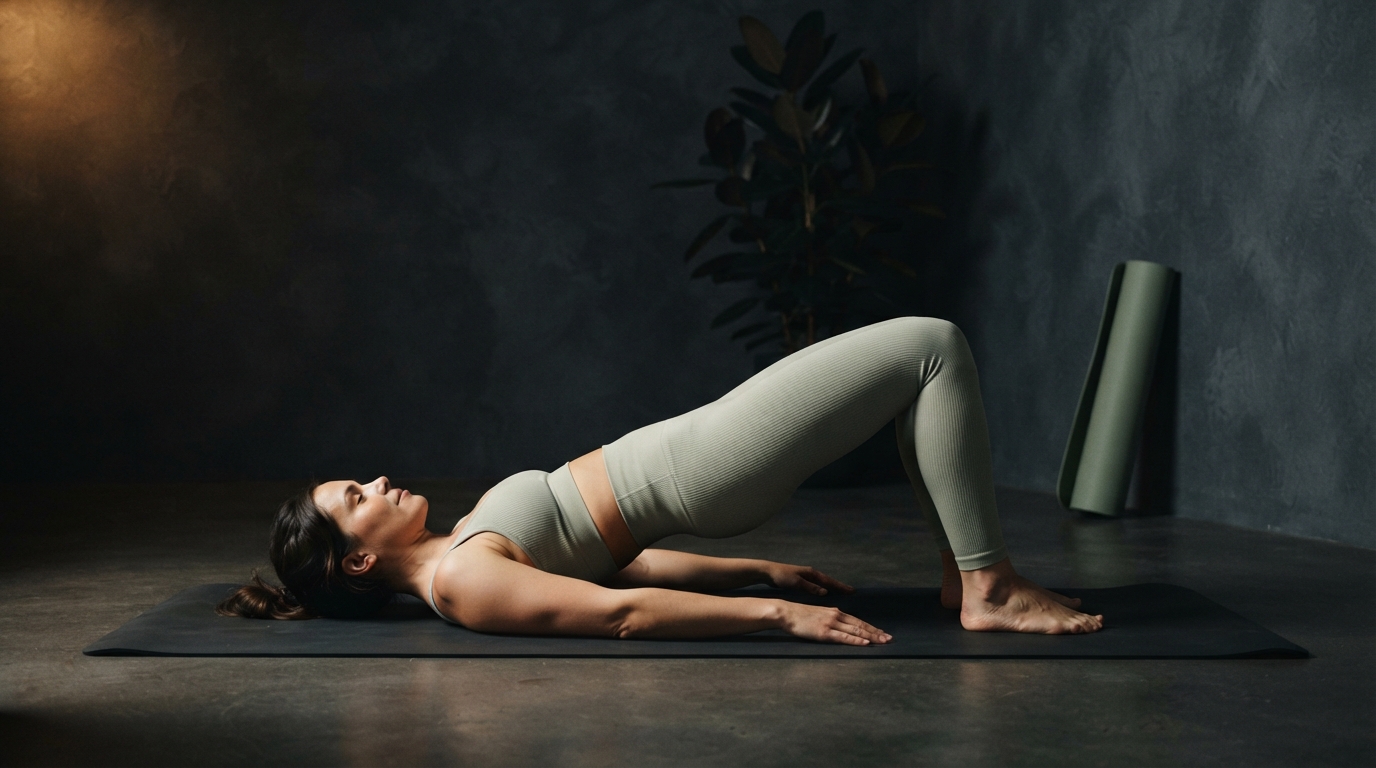
Diaphragmatic breathing with core engagement. Lie on your back, knees bent. Inhale through your nose, letting your ribcage expand sideways and your belly rise gently. Exhale through pursed lips, and as you exhale, gently draw your lower belly inward and slightly up, as if you're zipping up a tight pair of jeans. Hold that gentle tension for 5 to 10 seconds, breathing normally. Release and repeat. Do this 10 to 15 times, two to three times per day. This is the foundation. Every other exercise builds on this breath-core connection.
Heel slides. From the same lying position, extend one leg out along the floor, sliding your heel away from you, then slide it back. Keep your lower belly gently drawn in. If you see doming or feel any bulging along your midline, reduce the range of motion or stop. Alternate legs. Work up to 10 reps per side.
Dead bugs (modified). Lie on your back, arms reaching toward the ceiling, knees bent at 90 degrees over your hips. Exhale and slowly lower one arm overhead and the opposite leg toward the floor at the same time. Keep your lower back pressed into the floor. If your back arches or your belly domes, reduce the range. Return to start and switch sides. Work up to 8 to 10 reps per side.
Side-lying clamshells with core engagement. Lie on your side, knees bent, feet together. Keeping your feet touching, open your top knee like a clamshell, then close. The key: before you open your knee, gently draw your lower belly in. This trains your core to stabilize your pelvis during lower-body movement, which is where most daily-life diastasis recti stress comes from (carrying kids, picking things up, walking).
What you're looking for over time
Measure your gap every two to three weeks with the same finger-width check. You're looking for two things: the gap getting narrower, and the tissue underneath feeling firmer. Functional improvement matters more than the number. If your back pain is decreasing, your pelvic floor symptoms are improving, and your belly feels like it has more support when you cough or lift, the program is working even if the gap hasn't closed completely.
Research published in the Journal of Women's Health and Physical Therapy shows that targeted exercise programs can reduce diastasis recti inter-recti distance by 30% to 50% over 12 weeks in postpartum women. That's a meaningful improvement, though it doesn't mean the gap goes to zero for everyone.
When surgery is the right call
If you've been consistent with a proper exercise program for 3 to 6 months and see no change in gap width, tissue quality, or symptoms, surgical consultation is reasonable. A hernia (where tissue bulges through the gap, not just the gap itself) is also a reason to talk to a surgeon. The procedure, usually a tummy tuck with rectus repair, is not minor surgery, but it produces reliable results for women who don't respond to conservative treatment.
Where to go from here
Doing these exercises with proper form matters more than doing a lot of them. Create a free Catalyst Mom account to get guided diastasis recti workouts with video demonstrations.
Frequently Asked Questions
Can diastasis recti close completely without surgery?
In many women, yes. Gaps under 2.5 finger-widths with reasonably firm tissue often close or get very close to it with consistent exercise. Wider gaps with very thin tissue may improve significantly but might not close fully.
How long does it take to fix diastasis recti with exercise?
Most research tracks changes over 12 weeks of consistent exercise, 3 to 5 days per week. You may notice functional improvement (less back pain, better core control) within 3 to 4 weeks. Structural changes (narrower gap, firmer tissue) typically take 8 to 12 weeks.
Is it safe to exercise with diastasis recti?
Yes, if you choose the right exercises. Avoid crunches, sit-ups, full planks, heavy lifting, and anything that causes doming or bulging along your midline. Focus on TVA activation, breathing-based core work, and gradual loading.
Can running make diastasis recti worse?
It can if your deep core isn't strong enough to manage the repeated impact. Running is a high-impact activity that significantly increases intra-abdominal pressure with each step. Build a solid core foundation first (usually 3 to 4 months of consistent deep-core work), then reintroduce running gradually and watch for symptoms.
Does wearing a belly wrap or splint help?
Abdominal splints provide temporary mechanical support and some women find them helpful during the early postpartum weeks. They do not strengthen the muscles or close the gap on their own. Think of them like a wrist brace: helpful for support while you do the actual rehab, not a treatment by themselves.