The 60-Second Test
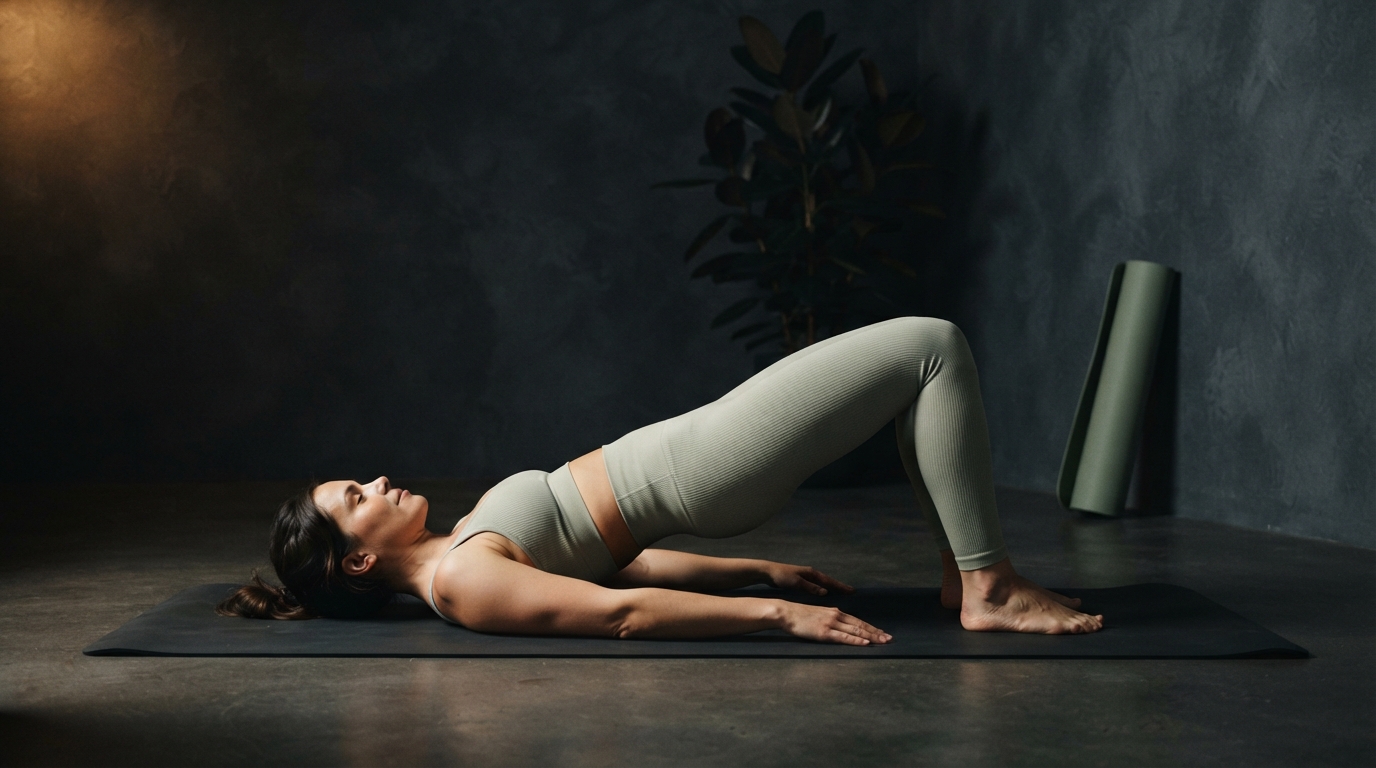
- Lie on your back, knees bent, feet flat on the floor.
- Place your fingers horizontally just above your belly button, fingertips pointing down toward your spine.
- Lift your head and shoulders slightly off the floor — just enough to feel your ab muscles tense on either side of your fingers.
- Feel the gap. How many finger-widths fit between the two muscle ridges? Note the width and the depth (does the tissue feel firm and springy, or soft and squishy?).
- Repeat 2 inches above the belly button and 2 inches below — separation can vary along the midline.
Reading Your Results
| Gap width | What it means |
|---|---|
| 1 finger or less | Normal — no diastasis |
| 2 fingers | Mild separation — very common, responds well to exercise |
| 2–3 fingers | Moderate diastasis — start a structured deep-core program |
| 4+ fingers, or very soft/deep | See a pelvic floor physical therapist for an individual plan |
Depth matters as much as width. A 2-finger gap with firm tension underneath is healthier than a 1-finger gap that feels like a soft trench. The goal of rehab is tension, not just narrowing.
Other Signs Worth Noticing
- A visible ridge or "doming" down your midline when you sit up out of bed
- A belly that still looks pregnant months after birth despite weight loss
- Low-back pain, hip pain, or a feeling of core weakness
- Leaking urine when you sneeze or jump (often a companion pelvic floor issue)
When to Test
Wait until at least 2–3 weeks postpartum — everything is naturally lax before then. Re-test every 2 weeks while doing core rehab so you can see progress in both width and tension.
What to Do With Your Result
If you found a gap, do not panic and do not start crunches. Begin with breath-led deep core work — our guide to safe diastasis recti exercises covers the exact starting moves, and the Core Restore Foundations program turns them into a progressive weekly plan.
A Fact That Should Lower Your Stress
By the third trimester, essentially 100% of pregnant women have some degree of ab separation — it is how the body makes room, not an injury. Around 60% still measure a gap at six weeks postpartum, and roughly a third without targeted work still have one at a year. So a positive self-test does not mean something went wrong; it means you now have a baseline and a plan.
Track It Properly: A Simple Log
Re-test every two weeks, same time of day, and log four things. Tension is the number that predicts how your core functions — watch it as closely as width.
| Date | Width above navel | Width at navel | Tissue feel (soft / springy / firm) |
|---|---|---|---|
| Week 0 | e.g., 3 fingers | e.g., 3.5 fingers | soft |
| Week 2 | … | … | … |
| Week 4 | … | … | … |
What a Pelvic Floor PT Checks That You Cannot
The finger test is a screening tool, not a full assessment. A pelvic floor physical therapist will also evaluate how your linea alba behaves under load, whether your pelvic floor co-contracts with your deep abs, your breathing mechanics, and any doming patterns during real movements. If your self-test shows 4+ fingers, a very soft trench, or no change after 6–8 weeks of consistent work, that one-hour assessment is the highest-value next step available.
Diastasis Self-Test FAQ
Does everyone have a gap right after birth?
Yes — immediately postpartum, separation is universal and expected. That is why testing before 2–3 weeks gives misleadingly scary numbers. Wait, then measure.
Can diastasis recti get worse on its own?
It can, if daily mechanics keep loading the midline — repeated crunch-style sit-ups out of bed, breath-holding while lifting, chronic constipation straining. The fix is the same habit set covered in our exercises-to-avoid guide.
Is a 1–2 finger gap something to fix?
Up to about one finger with firm tension is considered functionally normal post-baby. Two fingers with good tension and no symptoms is usually fine too — train normally and re-check occasionally.
This article is for educational purposes only and is not medical advice. Always consult your healthcare provider before starting or changing any exercise, nutrition, or fertility plan.