.png)
You've been doing crunches for weeks. Maybe months. The pooch is still there — and if anything, it looks worse when you sit up. You're not doing it wrong out of laziness. You're doing the one thing that most postpartum bodies can't afford to do yet.
Scroll the postpartum corners of Reddit and you'll find the same story thousands of times: "How do I get rid of this mom pooch? I'm doing crunches and nothing is working." The women who finally fix it almost always say the same thing — they had to stop, learn what was actually happening, and rebuild from the inside out.
What the "mom pooch" actually is
That soft lower-belly bulge that won't flatten is usually not fat and not leftover baby weight. It's diastasis recti — a separation of the two bands of your outer ab muscles that stretched apart to make room for your baby. The connective tissue between them is still thin and weak, so when you engage your abs, the middle pushes outward instead of drawing flat.
That's why it can look worse after a workout. You're not failing. You're loading a wall that hasn't been rebuilt yet.
Why crunches, planks, and sit-ups backfire
Crunches, planks, and sit-ups all raise the pressure inside your abdomen. With a healthy core that pressure is contained. With diastasis recti, it has nowhere to go but forward — straight into that weak midline. The result is coning (sometimes called doming): a visible ridge that pops up down the center of your stomach when you strain.
Every time you cone, you're pushing the gap wider — the exact opposite of what you're trying to do. This is the most repeated warning in postpartum fitness communities, and it lines up with how the core actually rebuilds its tolerance to pressure.
The 10-second check that tells you where you stand
Before any core work, you need to know whether your deep core is firing correctly. Here's a self-check you can do at home:
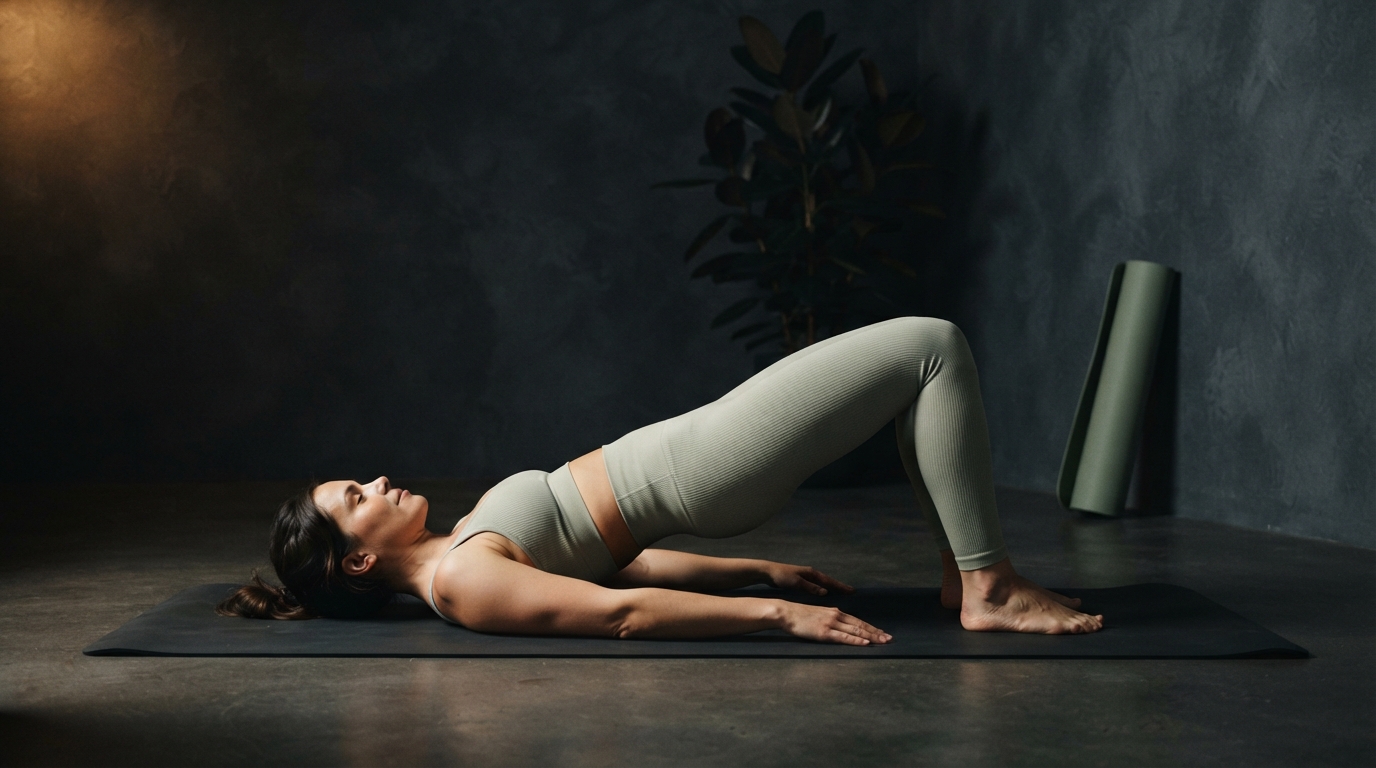
- Lie on your back, knees bent, feet flat.
- Place your fingers just inside your hip bones, flat on your lower belly.
- Exhale gently, as if fogging a mirror, and notice what happens under your fingers.
If your belly domes up into a ridge, the pressure is going the wrong way — that's your signal to back off and rebuild. If it flattens and draws in like a corset, that's your deep core doing its job. That flattening is what safe recovery feels like, and it's the sensation you'll train first.
A safe path that takes minutes, not hours
The other reason moms stall isn't effort — it's time. Nobody with a newborn is doing a 45-minute gym routine. Real recovery is built on short, consistent, low-pressure work: 12 to 15 minutes a day, done on the floor next to the baby. Structured well, a four-week arc looks like this:
- Week 1 — Foundation: reset your breath-to-core connection and wake up the deep muscles that switched off during pregnancy.
- Week 2 — Secure: lock in that bracing pattern so it holds when you move, using the check above.
- Week 3 — Stability: take the deep core into real movement — rolling, reaching, lifting the baby.
- Week 4 — Integration: add gentle, progressive load to close the gap and keep it closed.
Why a C-section and a vaginal birth need different plans
How you delivered changes how you should rebuild. After a C-section, scar tissue and a cut through the abdominal wall mean you need extra time on gentle pressure management and scar mobility before loading anything. After a vaginal birth, the priority is coordinating your core with a pelvic floor that took the brunt of delivery. A single generic routine ignores both of those realities — which is why so many "postpartum ab" programs quietly don't work.
The bottom line
Your mom pooch isn't permanent, and it isn't a willpower problem. It's a rebuild — and the first move is to stop the exercises that widen the gap, learn the 10-second check, and give your deep core a few focused minutes a day. That's the safe way, and it's the way the moms who actually close the gap talk about.
Where to go from here
Ready to stop guessing and do the Brace Check as part of an actual plan? Create a free Catalyst Mom account to get your personalized core recovery program.
Frequently Asked Questions
Can diastasis recti heal on its own?
Mild separation often improves in the first few months after birth as your body recovers. But if the gap is still there after 8 to 12 weeks, it usually needs targeted deep-core rehab to close — and doing the wrong exercises in the meantime can keep it open or make it wider.
How long does it take to close the gap?
Most moms who train the deep core consistently see meaningful change within 4 to 8 weeks, though a wider separation or a C-section recovery can take longer. Consistency matters far more than intensity — 12 focused minutes a day beats the occasional long workout.
Are planks bad for diastasis recti?
Traditional full planks are usually too much too soon, because they spike abdominal pressure and often cause coning. They can be reintroduced later, once your deep core can hold pressure without doming — but they are not a starting point.
What is abdominal coning?
Coning, or doming, is the ridge that pushes up along the center of your stomach when you strain your abs. It signals that pressure is being forced into the weak midline instead of being contained, and it's the thing you want to avoid while the gap is healing.
Can I fix my mom pooch years after giving birth?
Yes. Diastasis recti responds to the right training whether you're six weeks or six years postpartum. The connective tissue can still be retrained and strengthened — it is never too late to start the deep-core work.